The central axis buildings of the Forbidden City have a profound and significant historical significance. They are not only the backbone of the ancient city of Beijing, but also an important carrier of the planning, architectural skills and cultural inheritance of the ancient Chinese capital. The following is a detailed explanation of the historical significance of the central axis of the Palace Museum:
First, it symbolizes imperial power and cosmic order
From south to north, the central axis of the Palace Museum is lined up with Yongding Gate, Zhengyang Gate, Tian ‘anmen, Duan Gate, Meridian Gate, Gate of Supreme Harmony, Hall of Supreme Harmony, Hall of Harmony, Hall of Preserving Harmony, Palace of Dry Qing, Hall of Communication, Palace of Earthly Tranquility, Shenwu Gate and other important buildings, which run through the north-south direction of the entire Beijing city. This layout is deeply influenced by the ancient Chinese feng shui theory and cosmology, symbolizing the center of imperial power and representing the cosmic order of the unity of heaven and man. The symmetry of the buildings on the central axis reflects the concept of “neutrality” and “balance” in traditional Chinese culture, implying the supremacy of imperial power and the unity and stability of the country.
Second, show the outstanding achievements of ancient Chinese urban planning and architecture skills
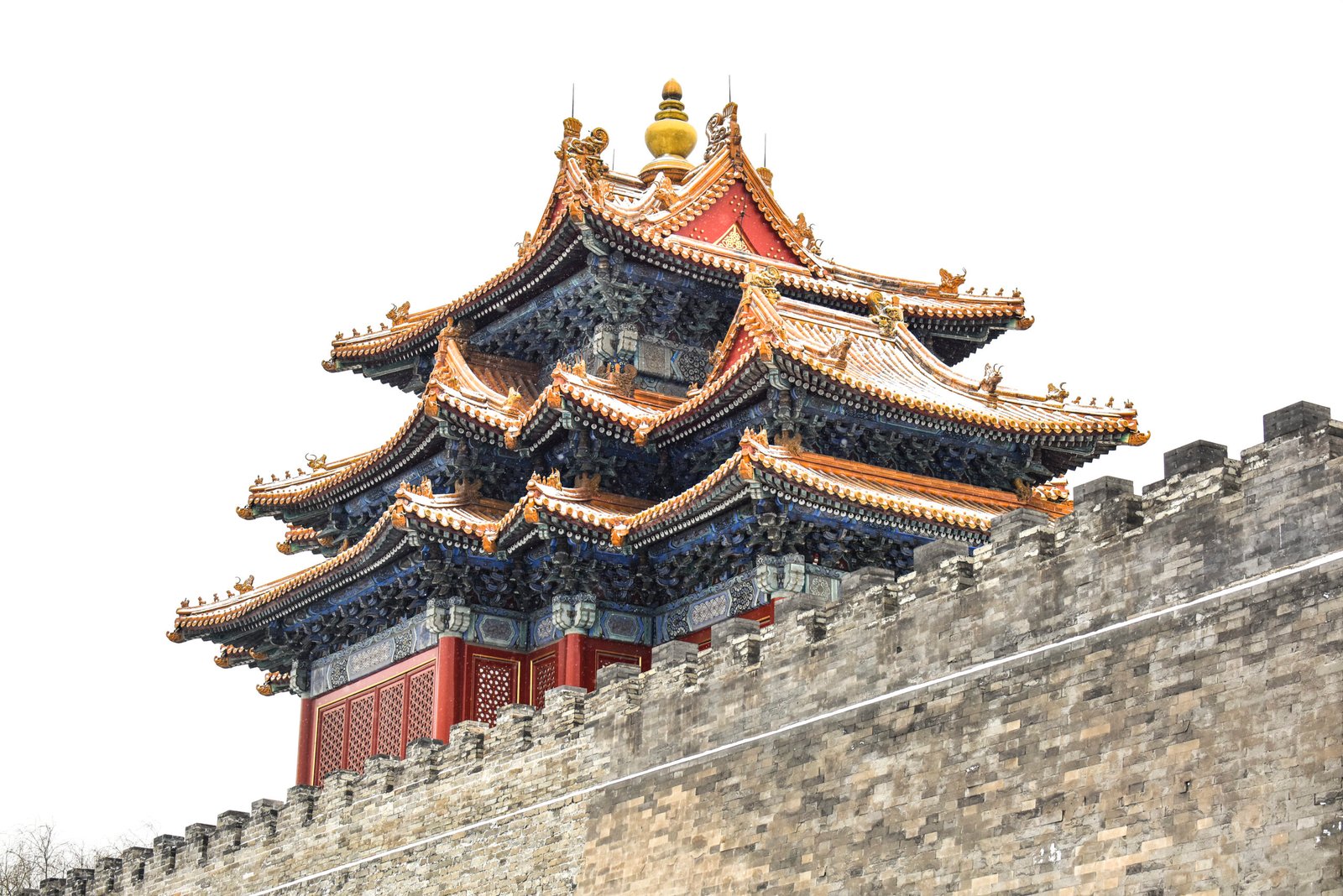
The central axis architecture of the Forbidden City is an outstanding representative of ancient Chinese urban planning and architectural skills. They are not only large and magnificent, but also highly skilled in construction and ornate in decoration. From the Meridian Gate to the Hall of Supreme Harmony to the Dry Qing Palace, every building carries the memory of history and the inheritance of culture. These buildings have been carefully designed in terms of height, volume, color, etc., so that the central axis presents a visual sense of flow. The layout and style of the central axis of the Forbidden City have had a profound impact on the urban planning and architectural art of China and even the world.
Thirdly, it carries rich cultural connotation and philosophical thoughts
The central axis building of the Forbidden City not only has high artistic value, but also carries rich cultural connotation and philosophical thoughts. The buildings and landscapes on the central axis have been carefully designed and laid out to reflect the majesty of the imperial power and the dignity of the state. At the same time, these buildings also contain profound philosophical thoughts, such as “the unity of heaven and man” and “Tao law nature”. These ideas have deeply influenced the architectural style and spatial layout of the central axis, making it an important symbol of Chinese traditional culture.
Fourth, witness the changes of Chinese history and cultural inheritance
The central axis of the Forbidden City bears witness to the changes of Chinese history and the inheritance of culture. From the residence, office and life of the imperial family in the Ming and Qing dynasties to the museum and tourist attractions after the founding of New China, these buildings have gone through countless vicissitudes of life, but they have always stood. They are not only the treasures of ancient Chinese civilization, but also the spiritual home of the Chinese nation. By visiting the central axis buildings of the Forbidden City, people can have a deep understanding of ancient Chinese history and culture, and feel the broad and profound Chinese civilization.
Fifth, to be a bridge between the past and the future
The central axis building of the Forbidden City is not only a witness of history, but also a bridge connecting the past and the future. They not only carry the memory of ancient Chinese civilization, but also the people’s longing for the future. Under the background of the new era, the protection and inheritance of the central axis of the Forbidden City is particularly important. By strengthening the protection of cultural relics and carrying out cultural tourism activities, more people can understand and feel the charm of Chinese civilization and promote the inheritance and development of Chinese culture.
To sum up, the historical significance of the central axis of the Palace Museum is far-reaching and significant. They are not only outstanding representatives of ancient Chinese urban planning and architectural skills, but also the treasures and spiritual homes of Chinese civilization. In the future development, we should continue to strengthen the protection and inheritance of the central axis of the Forbidden City, so that this valuable cultural heritage can be passed on forever.