The architectural features and uses of the meridian Gate of the Imperial Palace are as follows:
Architectural feature
Location and Layout:
The Meridian Gate is the main gate of the Forbidden City, located on the north-south axis of the Forbidden City, with a height of 37.95 meters.
In front of the meridian gate, there are the end gate, Tian ‘anmen (the main gate of the imperial city), and the Taihe Gate after the gate. Inside each gate, there are neat verandas arranged on both sides. This layout form is influenced by the system of “five gates and three dynasties” in ancient China, which highlights the majesty and solemnness of the palace building.
Plane shape:
The meridian gate plane is “concave” shape, which follows the style of the Yuan Hall of Daming Palace in the Tang Dynasty and Danfeng Gate of the Song Dynasty palace, and gradually evolved from the gate que of the Han Dynasty.
Meridian gate points up and down two parts, the lower for the pier, 12 meters high, the middle of the three doors, on both sides of a hidden door, commonly known as “Ming three dark five.”
Building structure:
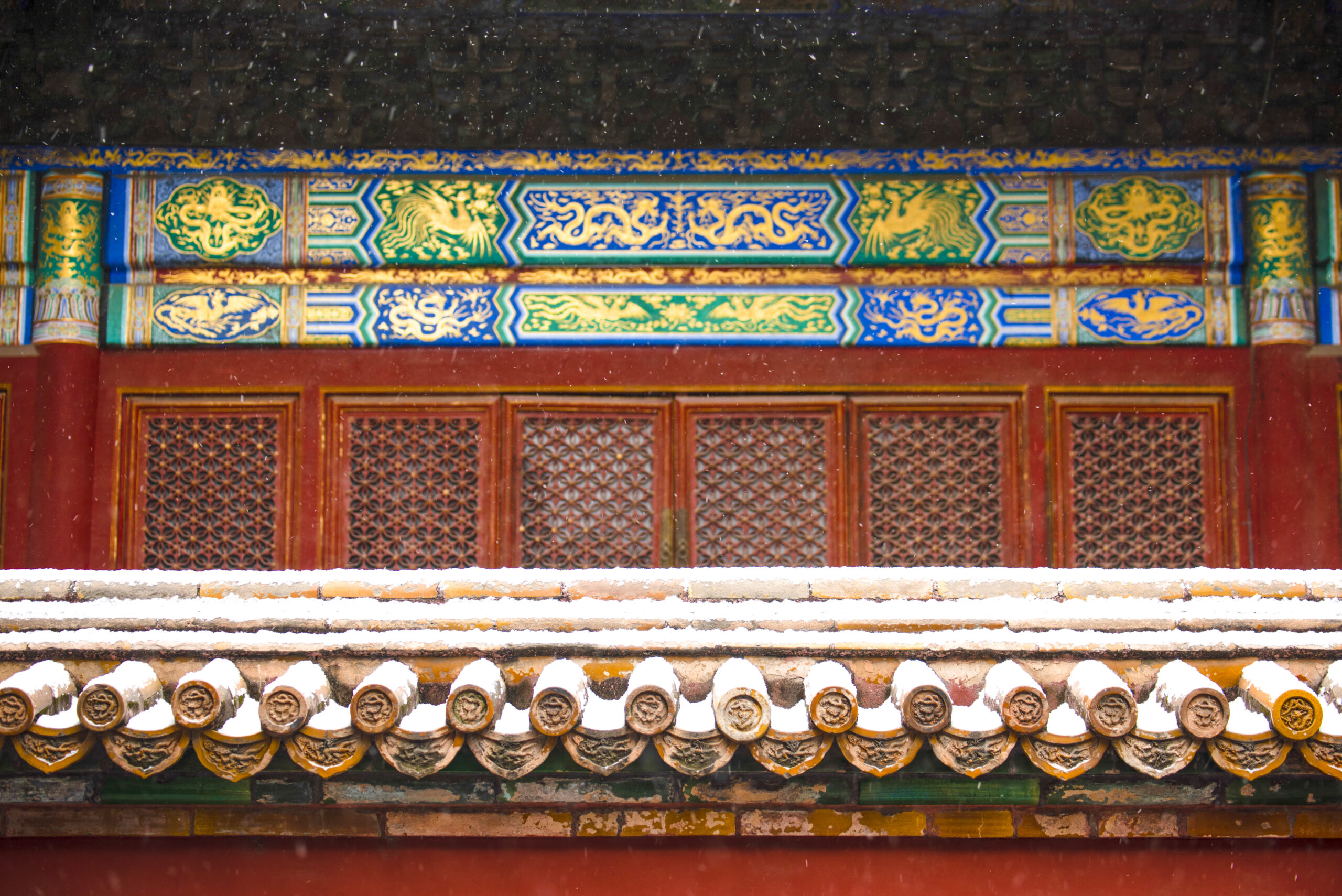
There is a gate tower in the middle of the pier, with nine wide faces, heavy eaves and roof covered with yellow glazed tiles, which is one of the highest grade roof forms in ancient Chinese architecture.
The two wings of the pier have a gallery of 13, commonly known as “wild wing building”, connected with the tower, forming a “U” shape, both beautiful and practical, increase the defense function.
There are square pavilions with double eaves and spires at both ends of the veranda.
There are three bell and drum pavilions on both sides of the main building, which are used to play bells and drums when the emperor offers sacrifices or holds large-scale activities.
Decorations and Symbols:
Meridian gate the whole building height scattered, left and right echo, shape like Zhu finch spread wings, so it is also known as “five Phoenix building”.
The Meridian Gate, as the tallest building in the Palace Museum complex, symbolizes the supremacy of the emperor and the powerful majesty of the country.
use
Hold a ceremony:
The Meridian Gate was the site of major ceremonies, such as the annual “ceremony” on the first day of October, where the emperor issued the almanac for the following year.
During the great victory in the war, the emperor would climb the Meridian Gate tower, accept the captives of the victorious soldiers and carry forward the national prestige.
Issue an edict:
The emperor sometimes issued an imperial edict at the meridian Gate to announce policies or major decisions to the world.
Chancellor of the House:
In the Ming Dynasty, the meridian Gate was also the place of the minister of Tingchang. Ministers who offended the emperor were taken to the east side of the imperial Road outside the Meridian Gate to be punished with sticks, a system common in the Ming Dynasty.
Ceremonial placement:
During festivals or important celebrations, the meridian gate will also be placed with guards to highlight the majesty and gravitas of the royal family.
Official access:
The five doors of the meridian gate each have their own specific purposes, the middle door for the emperor, the east door for civil and military officials to enter and exit, the west door for the royal princes to enter and exit, and the two ye doors are only opened when holding large-scale activities.