Planning your 2025 trip to the Terracotta Army means you need to plan early. Each year, about two million people visit this old site. You should try to avoid big crowds. You can go by taxi, shuttle, or metro and bus. Here is a quick guide:
| Transportation Method | Details |
|---|---|
| Taxi from airport | Go straight to the museum, cost is CNY 150-200 |
| Shuttle bus + local bus | Take airport shuttle to Xi’an University, then Lintong Bus 602 or tourist bus line 5 (306) |
| Metro + bus | Take metro from Xi’an North Railway Station, then bus to the museum |
Many visitors have trouble with the language, so buying tickets early and having a plan helps you feel ready. Use this guide for tips on when to go, what to see, and how to make your trip easy.
Key Takeaways
- Buy your Terracotta Army tickets online before your trip. This helps you not miss out, especially when it is busy or during holidays. Go early in the morning or late in the afternoon on weekdays. You will see fewer people and can take better photos. Take a taxi, shuttle bus, or use the metro and bus from Xi’an or the airport. These ways make it easy to get to the site. Start your visit at Pit Three. Next, go to Pit Two. End your visit at Pit One. This order makes your trip smooth and fun. Wear shoes that are comfortable. Dress for the weather. Bring cash to buy snacks. This will help you stay comfortable during your visit.
Getting There

From Xi’an
You have several ways to reach the site from downtown Xi’an. Here’s a quick look at your main options:
| Starting Point | Mode of Transportation | Travel Time | Cost (RMB) | Pros | Cons |
|---|---|---|---|---|---|
| Anywhere | AOT Tour | Varies | Included | Hassle-free | None |
| Xi’an Xianyang International Airport | Shuttle Bus | 60-70 minutes | 188 | Direct, comfortable | Pricier, limited services |
| Xi’an Bei Railway Station | Direct Bus | 1.5 hours | From 30 | Direct, budget-friendly | Must book in advance |
| Xi’an Railway Station | Train + Taxi | 1 to 1.5 hours | 20-50 | Faster | Need to align with train |
| Downtown Xi’an | Metro + Bus | 2+ hours | 10-15 | Budget-friendly | Multiple transfers needed |
| Downtown Xi’an | Tourist Bus | 1.5 hours | 30 | Direct | Pressure to purchase |
You can also take Metro Line 2 to Beidajie, switch to Line 1 to Fangzhicheng, then Line 9 to Huaqing Pool. From there, hop on Lintong Bus 602 or Tourist Bus 613. This trip takes about 2 hours and costs around 11-14 RMB.
From Airport or Train
If you land at Xi’an Xianyang International Airport, you can:
| Transportation Option | Cost (CNY) | Estimated Duration | Additional Notes |
|---|---|---|---|
| Airport Shuttle Bus | 45 | About 1 to 1.5 hours | Runs 9:00-19:30, tickets at Terminal 3 Exit 314, accepts cash and electronic payments. |
| Taxi | 150-200 | Approximately 1 hour | Use licensed taxis with meter, beware of scams. |
| Subway + Bus | ~37 (7 + 30) | About 2 hours | Multiple transfers required. |
From Xi’an North Railway Station, a taxi takes about 1 hour and costs 160-220 RMB. If you prefer public transport, expect a journey of 2 to 2.5 hours with several transfers.
From Other Cities
Traveling from Beijing or Shanghai? Here’s what you need to know:
| Departure City | Transport Mode | Travel Time to Xi’an | Transfer to Site | Transfer Time | Notes |
|---|---|---|---|---|---|
| Beijing | High-speed train | 4.5 to 6 hours | Taxi or tourist bus | ~1 hour | About 20 daily trains from Beijing West to Xi’an North |
| Shanghai | Flight | ~2.5 hours | Taxi or shuttle + tourist bus | ~1 hour | Over 40 daily non-stop flights from Hongqiao/Pudong to Xi’an Airport |
| Shanghai | High-speed/overnight train | 6.5 to 15+ hours | Taxi or tourist/city bus | 1 to 1.5 hours | Multiple daily trains from Shanghai to Xi’an North or Xi’an Station |

Transport Tips
- Book a private or group tour with hotel pickup if you want a stress-free trip.
- Early morning tours help you beat the crowds.
- Bring cash for snacks and small purchases.
- Wear comfy shoes—you’ll walk a lot.
- Dress for the weather, since tours run rain or shine.
Tip: If you want to try local food, let your guide know in advance!
Terracotta Army Tickets

How to Book
You have to buy tickets online before you visit. The museum does not sell tickets at the door, so plan early. Here are some ways to get your tickets:
- Go to the Emperor Qinshihuang’s Mausoleum Site Museum website. This site will send you to Trip.com to buy tickets.
- Use the museum’s WeChat account. You can find a menu there to book tickets.
- Pick a trusted website like Viator or China Explorer Tour. These sites can give you extra help, like a guide or rides.
Note: You must show your passport or give your passport number when you book and when you enter. If you are from another country, you need to swap your online ticket for a paper one at the gate.
Prices and Inclusions
Ticket prices can change with the season or ticket type. Most people pay about 120 CNY, which is about $17. Some tours cost more but give you extra things.
| What’s Included in Basic Ticket | What’s Not Included |
|---|---|
| Entry to the Terracotta Army Museum | Personal guide |
| Admission to Emperor Qinshihuang’s Mausoleum | Lunch or meals |
| Shuttle bus between museum and mausoleum | Hotel pickup/drop-off |
| Entry by passport scan (no paper ticket needed) | Extra shows or attractions |
Some tours give you more. You might get a guide who speaks English, a ride from your hotel, or lunch. Always check what you get before you pay.
Tip: The basic ticket lets you visit the museum and the mausoleum park. You can ride the shuttle bus between them for free. If you want a guide or to skip the line, look for special tours.
When to Reserve

The Terracotta Army is very popular. Tickets sell out fast, especially on weekends and holidays. Here is how to make sure you get a ticket:
- Buy your ticket online as soon as you can. Some websites let you buy up to 30 days before your visit.
- During busy times, like April to October or Chinese holidays, try to book 1 or 2 weeks early.
- If you wait too long, you might not get a ticket, especially on busy days.
| Aspect | Details |
|---|---|
| Peak Travel Season | April to October, especially during Chinese National Holidays |
| Recommended Booking Timeframe | At least 1 to 2 weeks in advance during peak seasons |
| Online Booking Options | Some platforms allow booking up to 7 days or over 30 days in advance |
| Offline Ticket Purchase | Not allowed; all tickets must be booked online |
| Reason for Early Booking | High demand and quick sell-out of tickets during peak times |
Remember: Most tickets cannot be refunded. Some websites give a full refund if you cancel at least 24 hours before your visit. Always check the rules before you buy.
Best Time
Best Months
You want to pick the right season for your visit. Spring and autumn are the best. From April to June and September to November, the weather feels mild and comfortable. You get sunny days, cool breezes, and fewer tourists. In spring, temperatures usually stay between 59°F and 77°F. Autumn brings cooler air, with temperatures from 50°F to 68°F. You can wear light layers, like a long-sleeved shirt and a thin jacket. If you visit in summer or during big holidays, you will face heavy crowds and long lines.
Here’s a quick look at crowd levels by month:
| Period | Visitor Crowds | Notes and Recommendations |
|---|---|---|
| July to August (Summer) | Busiest | Hot, crowded, long lines. |
| Late Jan – Early Feb (New Year) | Busiest | Major holiday, avoid if possible. |
| October 1-7 (National Day) | Busiest | Overwhelming crowds, book early. |
| May 1-5 (Labor Day) | Busiest | High visitor numbers. |
| November to February (except New Year) | Least crowded | Cold, but peaceful and great for photos. |
| March to May (Spring) | Moderate | Pleasant weather, manageable crowds. |
| September to November (Autumn) | Moderate | Mild weather, balanced crowds. |
Best Days and Hours
You can make your visit much easier by choosing the right day and time. Weekdays always feel less crowded than weekends or holidays. Try to avoid Chinese New Year, National Day, and Labor Day. If you can, plan your trip for a regular workday.
Arrive early. The museum opens at 8:30 AM. If you get there before 8:30, you will be among the first inside. Most tour groups arrive after 10:00 AM. Late afternoon is also a smart choice. After 4:00 PM, crowds thin out, and you get better light for photos.
| Aspect | Recommendation |
|---|---|
| Best Days | Non-holiday weekdays |
| Best Time of Day | Before 8:30 AM or after 4:00 PM |
| Periods to Avoid | Major holidays and summer vacation |
| Extra Tip | Plan for about 3 hours to explore the site |
Tip: If you travel with kids, an early Saturday morning visit works well. Children feel more energetic, and you avoid the rush.
Avoiding Crowds
You can dodge the biggest crowds with a few smart moves:
- Visit early in the morning or late in the afternoon.
- Choose spring or autumn for mild weather and fewer tourists.
- On busy days, start with Pit 3, then Pit 2, and finish at Pit 1.
- Book your tickets online as soon as you know your dates.
- Avoid weekends and national holidays whenever possible.
If you follow these steps, you will enjoy a relaxed visit, clear views, and better photos. You will also spend less time waiting in line and more time exploring.
Terracotta Army Highlights
Main Pits
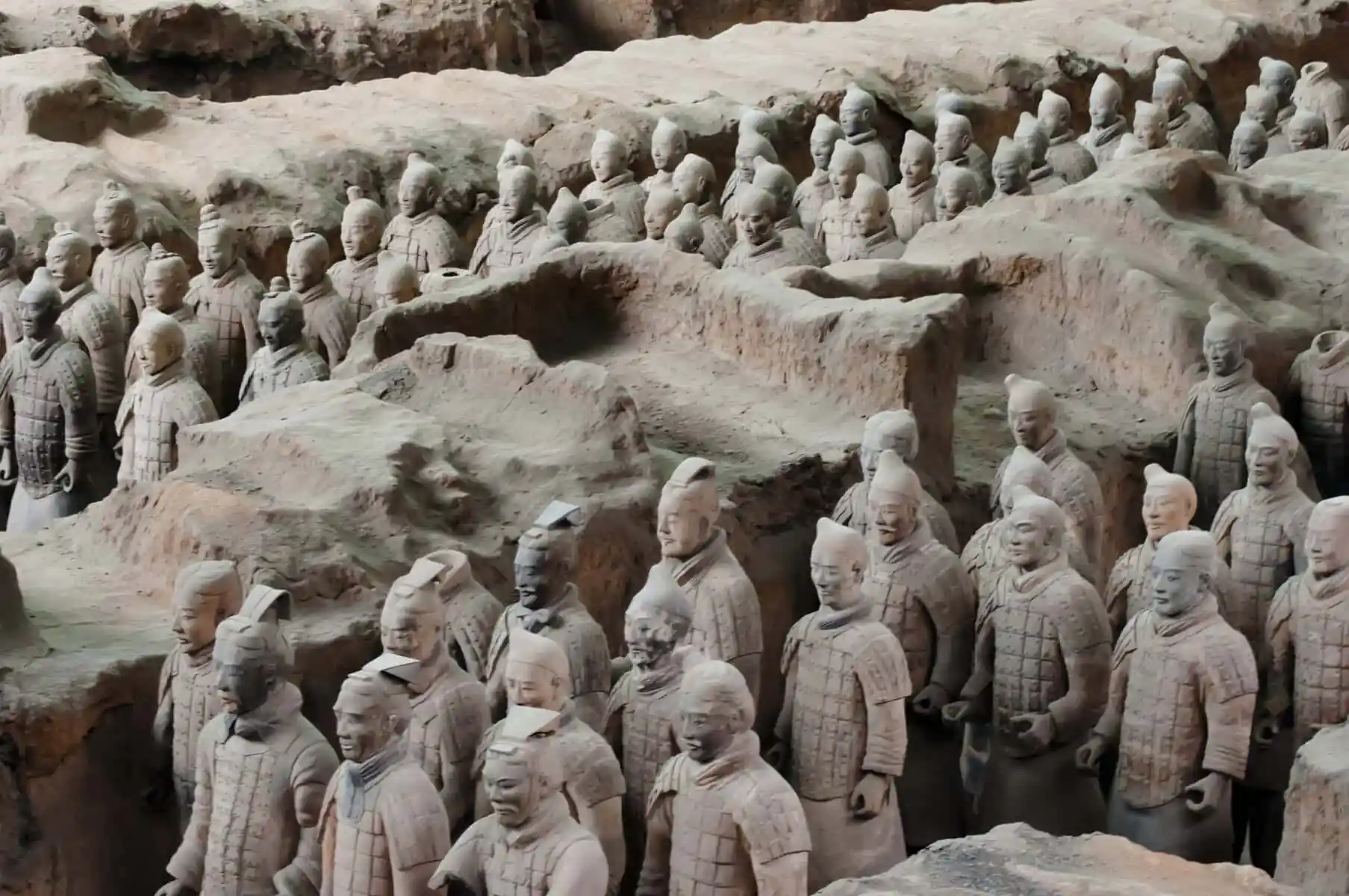
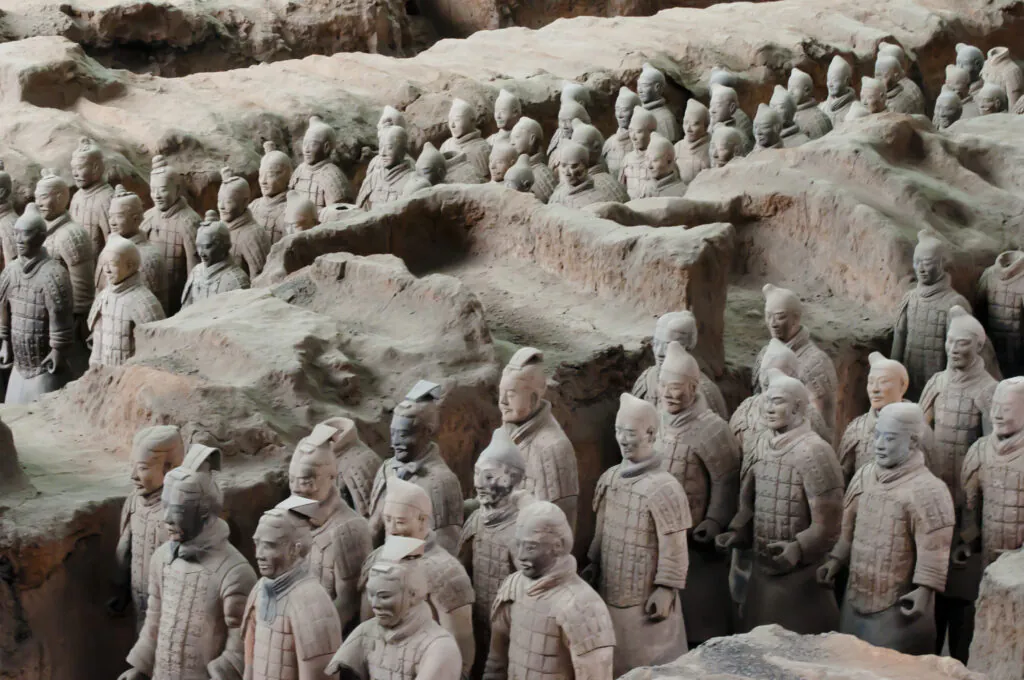
When you visit the Terracotta Army, you will see three main pits. Each pit has its own story and layout. Here’s a quick look:
| Pit Number | Size and Shape | Contents and Layout | Historical Significance |
|---|---|---|---|
| Pit One | Largest, about 750 x 203 feet | Around 6,000 warriors in battle formation, with infantry, archers, chariots, horses, and officers | Shows the main force protecting Emperor Qin Shi Huang in the afterlife. Displays huge skill and planning. |
| Pit Two | Smaller, R-shaped | About 1,400 warriors, including archers, cavalry, and chariots | Highlights different military units and tactics. Complements Pit One’s army. |
| Pit Three | Smallest, about 68 x 55 feet | A few commanders, likely a command post | May represent the army’s leaders. Gives clues about Qin military ranks and burial customs. |
You will notice that Pit One feels the most impressive. Pit Two and Pit Three help you understand how the ancient army worked.
Exhibition Hall
The Exhibition Hall lets you get close to the details. You will see:
- Life-sized warriors, each with unique faces and armor.
- Soldiers of all ranks: generals, officers, archers, cavalry, and chariot drivers.
- Terracotta horses standing with the warriors.
- Bronze chariots, gold and silver treasures, and rare animals.
- Displays about the emperor’s palace, gardens, and even entertainers.
The hall has eight themed sections. You can learn about the emperor, the building of the tomb, and the amazing skills of the craftsmen.
Mausoleum Park
Step outside the pits and you will find the Mausoleum Park. This area covers the emperor’s tomb and peaceful gardens. You can walk through Lishan Garden, see burial sites for horses, and spot bronze cranes and ducks. The park feels calm and gives you a break from the crowds.
Visit Routes
To make the most of your visit, try this order:
- Start with Pit Three (smallest and quietest).
- Move to Pit Two for more variety.
- Finish at Pit One for the grand finale.
- Explore the Exhibition Hall.
- End your trip with a stroll in the Mausoleum Park.
Tip: This route helps you avoid crowds and saves the most exciting part for last!

Time Needed
Most people spend 2 to 4 hours at the Terracotta Army. If you want to see everything, plan for about 4 hours. Here’s a guide:
| Site Section | Recommended Duration |
|---|---|
| Pit 1 (largest pit) | ~1 hour |
| Pit 2 | ~45 minutes |
| Pit 3 (smallest pit) | 20-30 minutes |
| Exhibition Hall | 30-45 minutes |
| Lishan Garden | 1 to 1.5 hours |
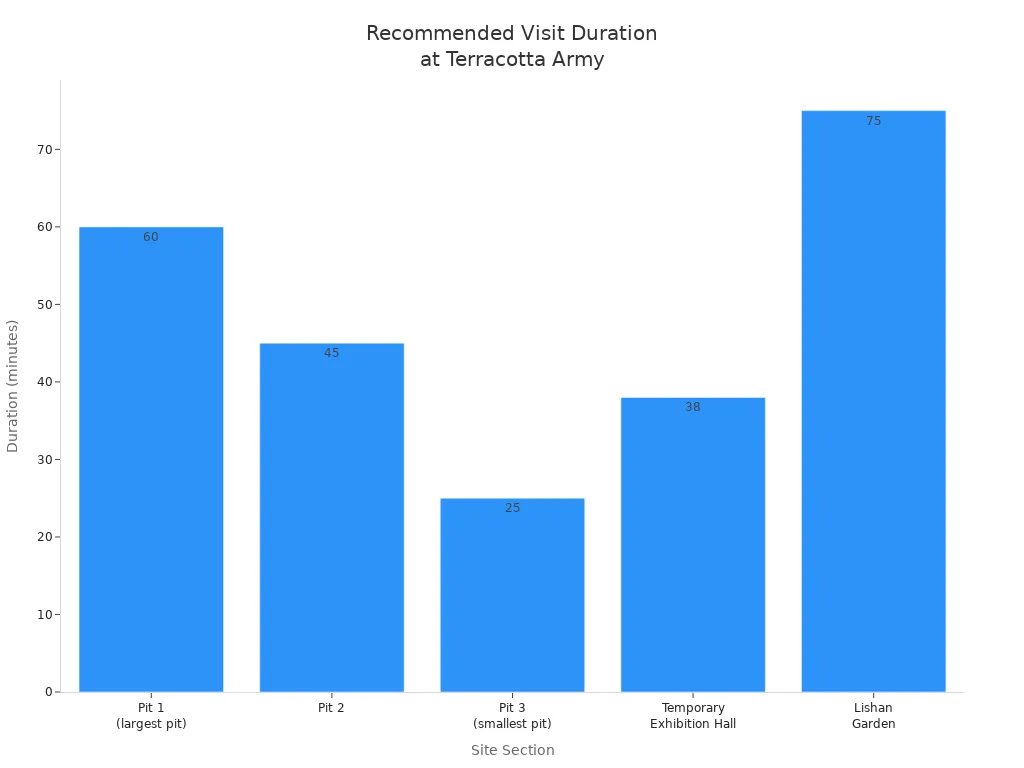
If you have less time, focus on the three pits and the Exhibition Hall. You will still get a great experience.
Onsite Tips
Navigation
The site is big, but it is simple to get around. Free maps are at the entrance and at help desks. Pick up a map before you begin. Signs in English and Chinese show you where to go. You will see signs for each pit, the Exhibition Hall, and the Mausoleum Park. If you cannot find your way, ask a staff member for help. They are nice and will help you. You can also use your phone’s map app if you need more help.
Accessibility
Everyone can visit the museum. Most main halls and pits have ramps for wheelchairs. You can rent a wheelchair at the entrance if you need one. The paths are smooth and flat, so it is easy to move. There are bathrooms for people with disabilities. Bring a friend or ask staff if you need help. Strollers are good to use here, too. Tell your tour company early if you need special help.
- Wheelchairs can be rented at the site
- Paths are flat and paved
- Bathrooms are easy to use for everyone
- Staff and friends can help you
Dining
If you get hungry, there are many places to eat nearby. Try Da Qin Xiao Yan for a meal like people ate long ago. You can try foods such as braised pork belly, steamed buns, and thick stews. This food lets you taste what people ate in ancient China. You can also eat at modern restaurants or cafes. They have both local and world foods.
| Restaurant Name | Cuisine Type | Price Range | Features |
|---|---|---|---|
| YEN | Cantonese | ~$30 | Fancy place to eat |
| WOOBAR | Bar/Lounge | ~$30 | Cocktails, seats inside or out |
| Tasuro Japanese | Japanese | ~$30 | Teppanyaki, modern style |
| Flair | Southeast Asian | Expensive | Rooftop, city views |
| XIAN kitchen | International | ~$30 | Local and global foods |
Photography
You can take pictures almost everywhere, but do not use flash in the pits. Use sunlight for better photos. Early or late in the day is best for soft light and fewer people. Bring a small camera or your phone. Big tripods are not allowed. If you want a photo with a warrior, find the fake statues outside.

Tip: Put your bags in the luggage area near the entrance. This makes it easier to take photos.
Safety
Keep your things close to you, especially when it is crowded. Watch out for pickpockets. Only use real buses or taxis. Some people near the parking lot may try to sell fake tickets or tours. Do not talk to them. Always buy tickets online or at the real entrance. If someone tries to take you to a “real” site somewhere else, just walk away.
- Watch out for fake buses and illegal taxis
- Never buy tickets from strangers
- Learn what the real site looks like before you visit
Itinerary Ideas
Half-Day Plan
Short on time? You can still see the best parts in just half a day. Here’s a simple plan to help you make the most of your visit:
- Leave Xi’an city and drive about one hour to the Museum of Qin Terra-cotta Warriors and Horses.
- When you arrive, you might want to take a golf cart from the parking lot to the entrance. This saves your energy for exploring.
- Spend around 2.5 hours touring the three main pits. Start with Pit 1, where you’ll see thousands of life-sized warriors. Move on to Pit 2 for chariots and more soldiers. Finish at Pit 3, which shows the command post.
- Don’t miss the Bronze Chariot Exhibition Hall. You’ll see some of China’s oldest and best-preserved bronze chariots.
Tip: This plan works well if you have a morning or afternoon free. You’ll need about 3.5 to 4 hours, including travel.
Full-Day Plan
If you have a full day, you can enjoy a deeper experience and even add some extras. Here’s how your day could look:
- Start with a hotel pickup at 8:00 am. This makes your morning easy and stress-free.
- Spend about three hours exploring the museum and all three pits. Take your time and listen to your guide’s stories.
- Enjoy a tasty local lunch. Many tours include this, so you get to try real Xi’an flavors.
- In the afternoon, you can watch the Tang Dynasty Music & Dance Show for a taste of local culture.
- Your guide will help you avoid crowds and shopping traps. You’ll also get water and helpful tips along the way.
Note: A full-day tour often includes transportation, meals, and tickets. You get more time to explore and relax.
Nearby Sights
Want to see more? You can add these popular spots to your trip:
- Huaqing Hot Springs: Walk through beautiful gardens and learn about the Tang emperors who relaxed here.
- Xi’an City Wall: Rent a bike or take a walk on this ancient wall for great city views.
- Big Wild Goose Pagoda: Visit this famous Buddhist pagoda and see its Silk Road history.
- Muslim Quarter: Try local snacks and see the lively markets in this colorful neighborhood.
These sights give you a full picture of Xi’an’s history and culture. You can mix and match based on your interests and time.
You can make your trip smooth and memorable with a few smart steps:
- Buy tickets online before you go.
- Start early to beat the crowds.
- Use the green tourist bus or a taxi for easy travel.
- Dress for the weather and bring a fan in summer.
- Follow the suggested route through the pits for the best experience.
Got your own tips or questions? Share them below—I’d love to hear from you!
FAQ
How long does it take to visit the Terracotta Army?
Most people spend about 3 to 4 hours at the site. If you want to see everything, plan for half a day. You can finish faster if you skip the Mausoleum Park.
Can I bring my own food and drinks?
You can bring water and small snacks. Large meals or picnics are not allowed inside the museum. You will find cafes and restaurants near the entrance if you get hungry.
Is there Wi-Fi at the Terracotta Army site?
Free Wi-Fi is available in the main visitor center. The signal may not reach all areas. You can use your phone for maps and translation, but download what you need before you arrive.
What should I wear for my visit?
Wear comfortable shoes because you will walk a lot. Dress in layers if you visit in spring or autumn. Bring a hat and sunscreen for sunny days. In winter, wear a warm coat.
See Also
Experience The Elegance Of Song Dynasty Hanfu Styles
Explore Distinctive Hanfu Makeup Looks On China Tours
Journey Through Chinese Hanfu Traditions Across Generations
Essential Advice For An Unforgettable Tai Chi Retreat
Selecting The Ideal Private China Tour To Suit You
Popular Packages
Choose Best Holiday Package

Why Choose This Tour? Customized Private Experience: Tailored for small groups (1-13 people) to ensure personalized attention. Cutting-Edge Tech Encounters:…

Explore Yunnan’s most iconic destinations in 8 days. From Kunming’s cultural charm to Dali’s lakeside beauty, Lijiang’s ancient towns, and Shangri-La’s Tibetan landscapes—this immersive China tour blends nature, heritage, and ethnic culture.
Why Choose This Datong Tour Package? Explore Datong’s most famous landmarks while embracing the elegance of traditional Chinese attire. This…

Introduction This is more than a conversation about health; it is an invitation to a Co-creative Wellness Retreat in one…

Why Choose This Shaoxing Yellow Wine (Huangjiu) Journey? This journey offers a cultural immersion into Shaoxing, the 2,000-year-old birthplace of…

This carefully planned itinerary balances nature, spirituality, and culture, offering travelers a well-rounded exploration of Tibet’s incredible heritage. Whether you're interested in Buddhist spirituality, natural landscapes, or authentic cultural experiences, this tour will allow you to experience the best of Tibet in an intimate and respectful way.