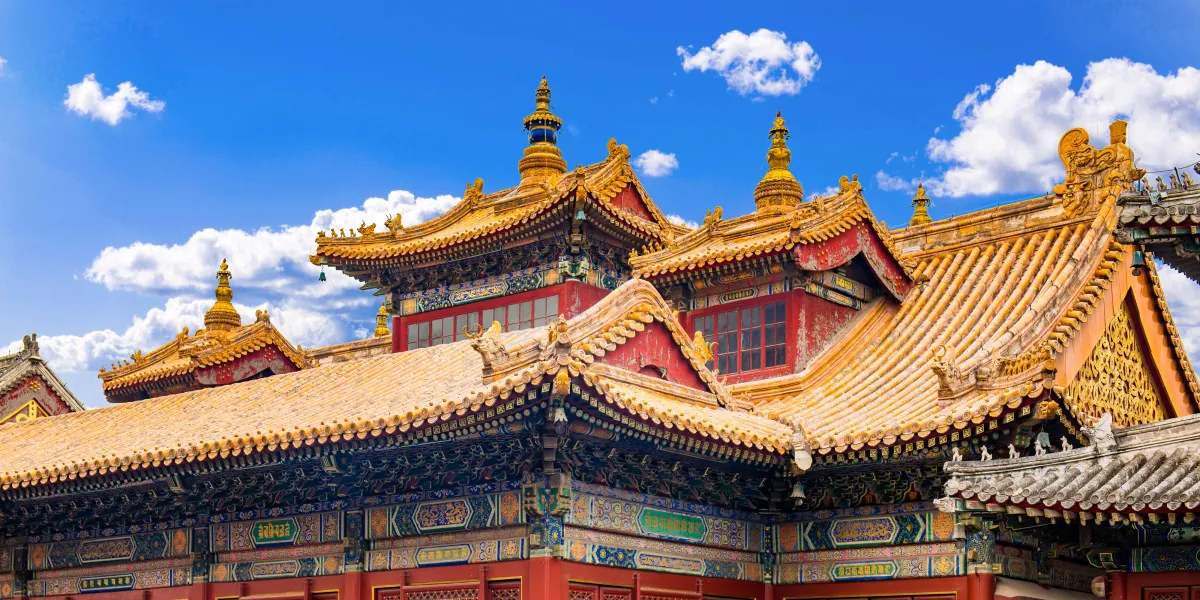
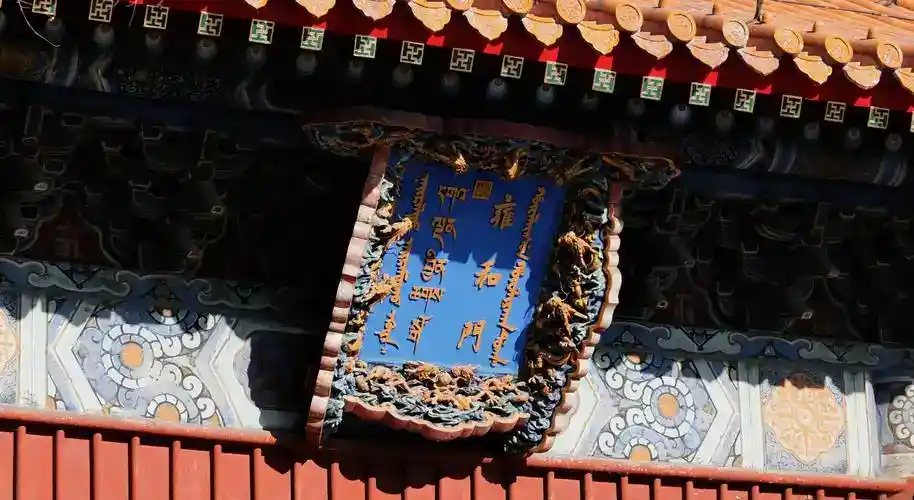
Yonghe Temple, also called 雍和宫, is a famous place in Beijing. It mixes Tibetan Buddhism with old Chinese royal traditions. This makes it a special cultural site to visit. Walking through its halls, you can feel the history and faith. Even though it’s in busy Beijing, the temple feels calm and quiet. It’s a great spot to relax and enjoy peace. Every part of Yonghe Temple lets you think and feel its spiritual beauty.
Key Takeaways
- Yonghe Temple mixes Tibetan Buddhism with Chinese royal customs. It offers a special cultural experience in Beijing.
- Go early in the morning or on weekdays. This helps you enjoy quiet surroundings and avoid big crowds.
- Check out the temple’s five main halls. Each hall has spiritual meaning and amazing art, like the huge Maitreya Buddha statue.
- Show respect for the temple by following its rules. Speak quietly and wear proper clothes.
- Visit nearby places like the Imperial Academy and Wudaoying Hutong. This makes your trip more interesting and cultural.
A Brief History of Yonghe Temple
Origins as Prince Yong’s Residence
Yonghe Temple started as a royal home. It was built in 1694 during the Qing Dynasty. Prince Yong lived there before becoming Emperor Yongzheng. The temple’s design still shows its royal past. Big halls and detailed carvings show Qing court style. Walking through, you can imagine the life of royalty.
Transformation into a Tibetan Buddhist Temple
In 1744, it became a Tibetan Buddhist temple. Emperor Qianlong, Yongzheng’s son, made this change. He wanted peace between the Qing court and Tibet. Monks from Tibet and Mongolia came to study here. Today, it is a symbol of unity and culture. Its mix of Chinese and Tibetan designs makes it special.
Its Role in Modern-Day Beijing
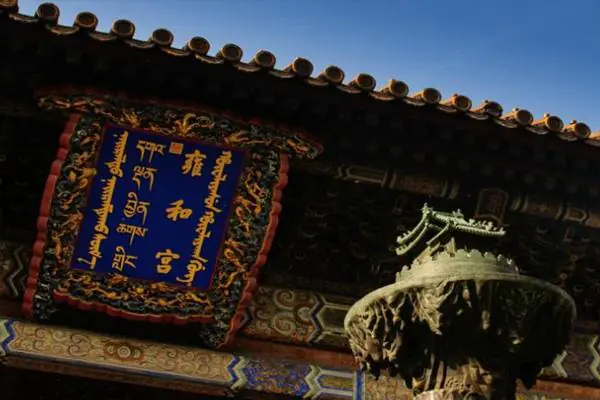
Yonghe Temple is important in Beijing today. People from all over visit it. Some come to see its beauty and learn about Buddhism. Others come to pray or enjoy its calm atmosphere. The temple shows Beijing’s history and spiritual diversity. Visiting lets you see how the past and present connect.
If you would like to learn more about Beijing, you can also check out other destinations including Forbidden City, Hutong Tour, and Great Wall Grandeur.
Tip: Visit early in the morning to avoid big crowds and enjoy quiet time.
Overview of the Temple’s Layout
The temple’s design follows old Chinese building styles. It has a central path with halls and courtyards on both sides. There are five main halls, each with special statues and decorations.
The Hall of Harmony and Peace is the first big hall. Inside, you’ll see three bronze Buddhas. Farther in, the Pavilion of Ten Thousand Happinesses has a huge Maitreya Buddha. This statue is 18 meters tall and made from one sandalwood piece. The courtyards have incense burners and old trees, adding to the calm feeling.
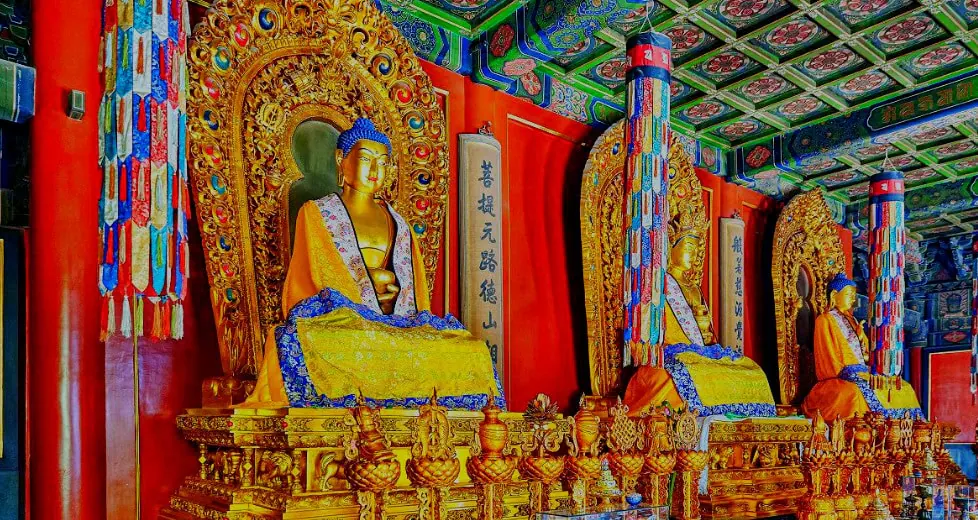
Walking through the temple shows its mix of Chinese and Tibetan designs.
Key Attractions Within Yonghe Temple
The Giant Maitreya Buddha Statue
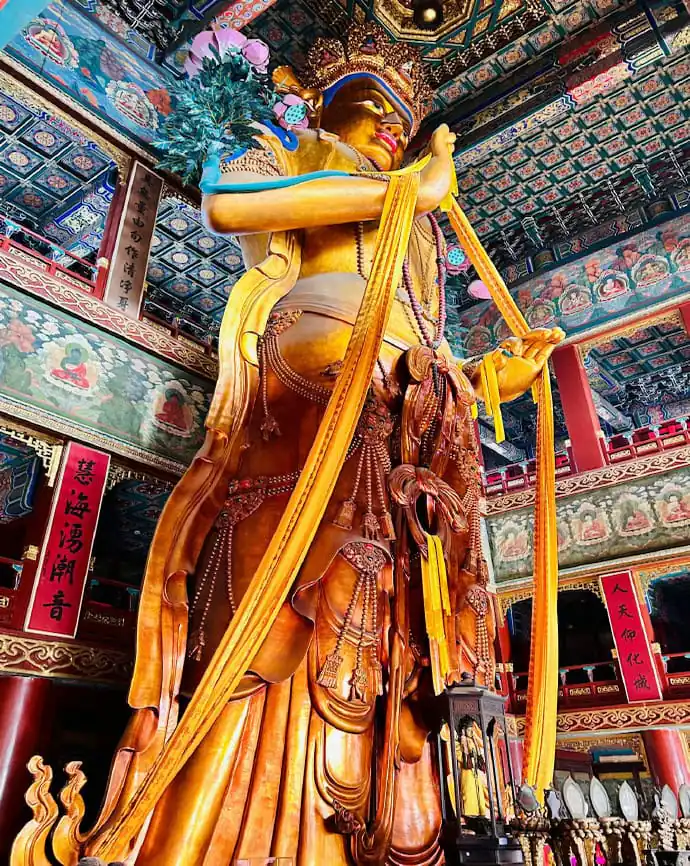
The Maitreya Buddha statue is a breathtaking sight to see. It stands 18 meters tall and is carved from one sandalwood piece. When you enter the Pavilion of Ten Thousand Happinesses, its size amazes you. The calm face and fine details show Tibetan Buddhist art.
This statue holds a Guinness World Record as the largest wooden Buddha. Standing near it, you can feel its spiritual power. The sandalwood scent fills the air, making the place feel sacred. The statue represents hope and joy, making it a must-visit spot.
Tip: Look up from the base to admire its full height.
Intricate Thangkas and Religious Artifacts
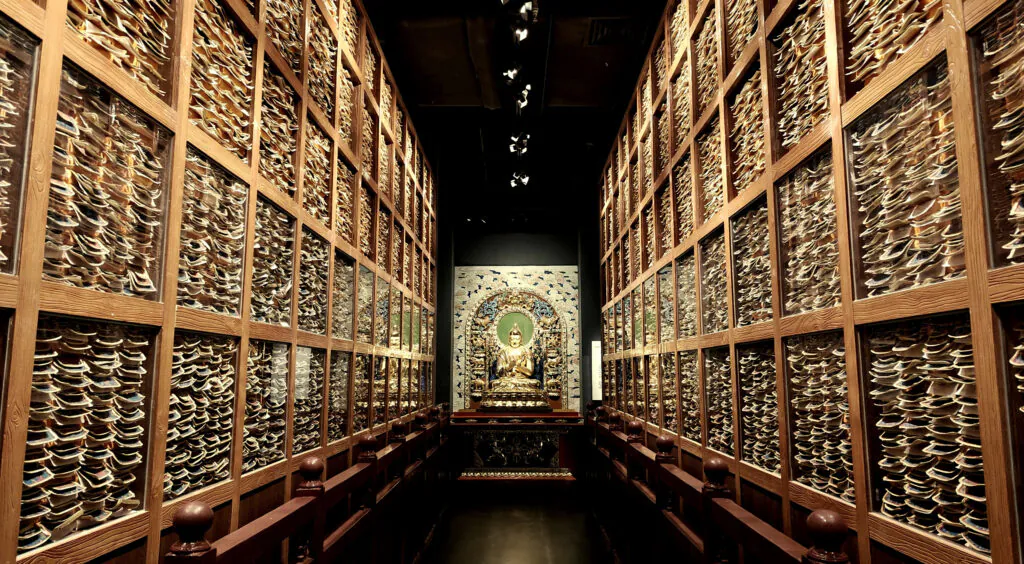
The temple has beautiful thangkas and other religious treasures. Thangkas are colorful Tibetan paintings on cloth, showing gods or teachings. These artworks hang in halls, each telling a special story.
You’ll also see old scriptures, ritual items, and statues of bodhisattvas. The fine details in these items show the link between art and faith. Take time to notice the brushstrokes on thangkas and carvings on statues.
Note: Some areas don’t allow photos to protect these sacred items.
Sacred Halls and Their Spiritual Significance
Yonghe Temple has five main halls, each with deep meaning. The Hall of Harmony and Peace is the first. Inside, three bronze Buddhas stand for the past, present, and future. This hall begins your spiritual journey.
The Hall of Everlasting Blessings has the Five Hundred Arhat Hill. This small mountain has 500 tiny statues of enlightened beings. Each statue looks different, showing many spiritual paths.
The Hall of the Wheel of the Law is for Buddhist ceremonies. Here, monks chant and perform rituals. The energy feels strong yet peaceful.
Each hall helps you think about Buddhist teachings. The temple’s layout leads you step by step into its spiritual center.
Daily Ceremonies and Authentic Buddhist Practices
When you visit Yonghe Temple, you can see daily rituals. These show the deep traditions of Tibetan Buddhism. The ceremonies create a calm and peaceful feeling. They let you see the spiritual life of the temple.
Morning Chanting Rituals
Every morning, monks gather in the Hall of the Wheel of the Law. They chant prayers that fill the air with soft, rhythmic sounds. These chants are more than just words; they hold sacred meanings. You can feel the devotion as monks recite old scriptures.
Tip: Arrive early to enjoy the quiet morning rituals before it gets busy.
Offering Incense and Prayers
Visitors often light incense sticks as a sign of respect. This act connects them to the divine. You can find incense burners in the courtyards. As the smoke rises, it carries your prayers and wishes. This simple act helps you feel the temple’s spiritual energy.
Observing Meditation Practices
In quiet spots of the temple, you might see monks meditating. Meditation is important in Buddhism and helps bring peace and focus. Even if you don’t join, watching them can inspire you. It may help you think about your own thoughts.
Special Ceremonies on Festive Days
On Buddhist holidays, the temple holds special events. Many people come to see these colorful ceremonies. Monks use instruments like cymbals and drums during rituals. These lively events show the temple’s role in faith and culture.
Note: Check the temple’s schedule to see if festivals are happening during your visit.
Watching these daily rituals helps you understand the temple’s spiritual meaning. Each ceremony shows the balance between tradition and devotion. This makes your visit to Yonghe Temple unforgettable.
Best Times to Visit Yonghe Temple
Seasonal Highlights
Yonghe Temple is beautiful in every season. In spring, flowers bloom, and the weather is mild. The trees turn green, making the courtyards peaceful and lively. A soft breeze adds to the calm as you walk around.
Summer brings cool shade from the leafy trees. The temple feels cooler than the busy city streets. Early mornings in summer are quiet and relaxing, with fewer people.
Autumn is the most colorful time to visit. Golden ginkgo leaves stand out against the red temple walls. The crisp air and bright skies are great for photos and reflection.
Winter turns the temple into a peaceful snowy retreat. Snow covers the roofs and courtyards, adding a magical look. Fewer visitors in winter let you feel the temple’s calm deeply.
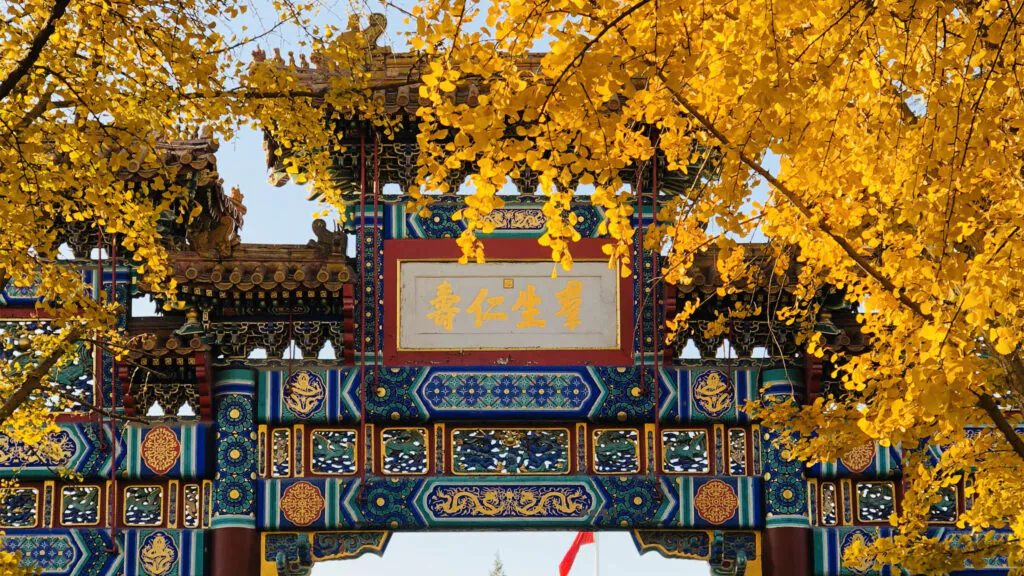
Tip: Autumn and winter are best for amazing photos.
Ideal Times of Day for a Peaceful Experience
To enjoy the temple’s calm, visit early in the morning. It opens at 9:00 AM, and arriving then avoids crowds. The quiet helps you feel the temple’s sacred energy.
Midweek mornings are the most peaceful times to visit. Weekends and holidays bring more people, making it busier. For a quieter trip, go on a weekday.
Evenings near closing time are also calm and beautiful. The sunset gives the temple a warm, golden glow. This is a great time for quiet thinking and enjoying the view.
Note: Avoid major festivals unless you want to see lively events.
Practical Tips for Visiting Yonghe Temple
How to Purchase Tickets
Getting tickets for Yonghe Temple is easy. You can buy them at the entrance or online.
- At the Entrance: Arrive early to avoid long lines. Tickets are sold from 9:00 AM to 4:00 PM.
- Online Booking: Book tickets online to skip waiting in line. Use official websites or travel apps for convenience.
Tip: Keep your ticket safe. You might need it to re-enter some areas.
Kids under a certain height and seniors may get discounts or free entry. Bring ID to prove eligibility for these benefits.
Transportation Options
Reaching Yonghe Temple is simple because of its central location. There are many ways to get there:
- Subway: Take Line 2 or Line 5 to Yonghegong Lama Temple station. Walk a short distance to the temple.
- Bus: Buses like routes 13, 116, and 684 stop nearby. Check schedules before you go.
- Taxi or Ride-Hailing Apps: Taxis or apps like Didi are quick options. Show the driver the name 雍和宫 for easy directions.
- Walking: Walk to the temple and visit nearby spots like Wudaoying Hutong or the Imperial Academy.
If you would like to know more about the transportation in Beijing, you can also check out our post: How to Get Around in Beijing: A Guide to Transportation
Note: Beijing traffic can be busy. Leave early to avoid delays.
Accessibility for Visitors with Mobility Needs
Yonghe Temple is welcoming to all visitors. Though some areas have steps, there are features to help those with mobility challenges.
- Wheelchair Access: Ramps and flat paths are available in some areas. Stairs in certain halls may need extra help.
- Rest Areas: Benches in courtyards offer places to sit and relax.
- Transportation Assistance: Taxis or ride-hailing apps can drop you close to the entrance.
Tip: Bring a companion or ask temple staff for help if needed.
Planning ahead makes your visit smooth and enjoyable for everyone.
Etiquette and Things to Avoid at Yonghe Temple
How to Behave in a Sacred Place
Yonghe Temple is a sacred site. Speak softly to keep the peace. Avoid loud talking or noisy actions. Help children stay calm and respectful during the visit.
Wear modest clothes to honor the temple’s traditions. Skip tank tops or shorts. Choose comfortable clothing that shows respect for the customs.
Do not touch statues, altars, or artifacts. These items are spiritually important. Look at them from a distance instead. Use marked areas for offerings and follow temple rules.
Rules for Taking Photos
You can take photos in some parts of the temple. Check signs to see where it’s allowed. Sacred halls often ban photography to protect the spiritual mood and fragile items.
If you take pictures, don’t use flash. Flash harms old paintings and statues. Be careful not to block paths while snapping photos.
Note: Ask before photographing monks or visitors. Respect their privacy and culture.
Mistakes to Avoid
Some visitors make errors without knowing. Don’t point at statues or sacred objects with your finger. Use an open hand to gesture instead.
Leave food and drinks outside the temple. Eating or drinking inside is disrespectful. Smoking is also not allowed anywhere on the grounds.
Take your time exploring the temple. Rushing through misses its beauty and meaning. Walk slowly to show respect and enjoy the experience.
Reminder: Following these rules makes your visit respectful and memorable.
Nearby Attractions to Explore Around Yonghe Temple
Imperial Academy (Guozijian)
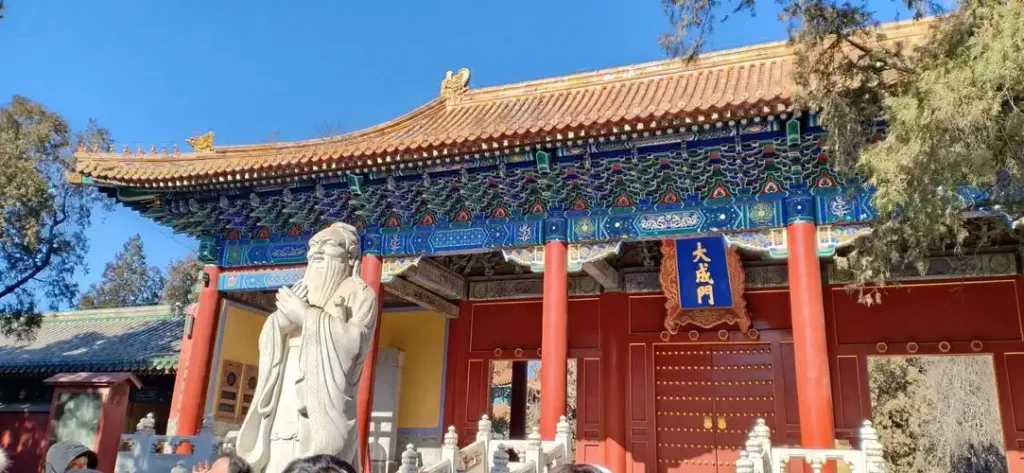
A short walk from Yonghe Temple is the Imperial Academy. It was the top school during the Yuan, Ming, and Qing dynasties. The site has classic Chinese buildings with red walls and carvings. Inside the same area is the Confucius Temple, adding more cultural value.
Walk through its peaceful courtyards and see stone tablets. These tablets list scholars who passed old imperial exams. They show China’s rich academic history. Visiting the Imperial Academy lets you enjoy a quiet place while learning about Beijing’s scholarly past.
Wudaoying Hutong: Snacks, Shops, and Relaxation
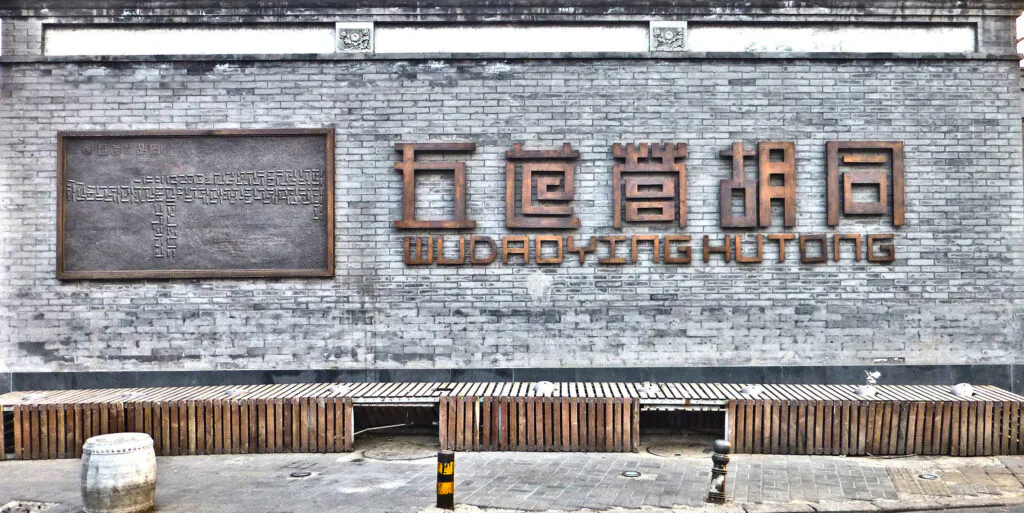
Wudaoying Hutong is a lively alley close to Yonghe Temple. It mixes old charm with modern creativity. As you explore, you’ll find small cafes, snack stalls, and unique shops.
Try local snacks like jianbing (savory crepes) or tanghulu (candied fruit). These treats give you a taste of Beijing’s food culture. For shopping, check out stores with handmade jewelry, vintage clothes, and cool souvenirs. The hutong also has quiet spots to relax and enjoy the local vibe.
Tip: Visit in the late afternoon for a fun and relaxed experience.
Yonghe Temple Gift Shop: Spiritual Bracelets
Before leaving Yonghe Temple, visit its official gift shop. The shop sells prayer beads, incense, and Buddhist-themed items. A special feature is the spiritual bracelet experience.
Pick a bracelet made from sandalwood or jade. Monks bless each bracelet, making it meaningful. It’s a great keepsake or gift for someone special. Buying from this shop helps support the temple’s care and traditions.
Note: Purchases here help preserve the temple’s culture and upkeep.
China Explorer Tour: Private Beijing Spiritual Tour
Overview of the 4-Hour Tour Experience
This private tour lets you explore Beijing’s spiritual and cultural side. In just four hours, you’ll visit the peaceful lama temple, also called Yonghe Temple. A guide will share its rich history and spiritual importance during your visit.
You can also learn the meanings of Buddhist statues, symbols, and prayer rituals, choose and bless a spiritual bracelet and enjoy a relaxed walk through a nearby hutong. You’ll find hidden spots, taste local snacks, and feel the city’s unique vibe. This tour blends spirituality with cultural discovery perfectly.
Note: The private tour gives you a personal and relaxed experience.
Why Choose China Explorer Tour for a Spiritual Journey
China Explorer Tour creates meaningful travel experiences. This tour highlights the spiritual beauty of the lama temple and the cultural charm of Beijing’s hutongs. With a private guide, you’ll learn more and enjoy a slower pace.
The well-planned schedule lets you focus on the experience, not the details. Whether it’s your first time or you’ve been before, this tour offers a fresh view of Beijing’s culture and spirituality.
Call to Action: Want to try this amazing journey? Book the “Private Beijing Spiritual Tour: Yonghe Temple Praying And Hutong Walk” now and make lasting memories!
FAQ
How can I get to Yonghe Temple?
Take the subway to Yonghegong Lama Temple Station (Lines 2 or 5). It’s a short walk from there. Buses like 13, 116, and 684 also stop nearby. Taxis or ride-hailing apps are easy options too.
Tip: Say 雍和宫 when asking for directions.
Can I take pictures inside Yonghe Temple?
You can take photos in some areas, but not in sacred halls. Look for signs before snapping pictures. Don’t use flash as it can harm artifacts and disturb the peaceful vibe.
Note: Don’t photograph monks or visitors without their permission.
Is there a dress code for visiting?
Yes, wear modest clothes to show respect. Avoid tank tops, shorts, or revealing outfits. Clothes that cover your shoulders and knees are best for exploring the temple.
Is Yonghe Temple wheelchair-friendly?
Some parts of the temple have ramps and flat paths for wheelchairs. But halls with steps might need help. Benches in courtyards offer spots to rest.
Why is Yonghe Temple special?
Yonghe Temple mixes Tibetan Buddhism with Chinese royal design. It has a giant Maitreya Buddha statue, colorful thangkas, and daily rituals. It’s a peaceful place to learn about Beijing’s spiritual and cultural history.
See Also
Shanghai Secrets: 10 Charming Old Lane Houses Loved by Locals
Why Mount Wutai Meditation Retreats Are Ideal for Mental Wellness Seekers
Your Ultimate Guide to Riding China’s High-Speed Trains as a Foreigner
Where to Experience the Best Dragon Boat Festival in China
Top 10 Private Tour Destinations in China to Visit in 2025
Popular Packages
Choose Best Holiday Package
Why Choose This Tour? Customized Private Experience: Tailored for small groups (1-13 people) to ensure personalized attention. Cutting-Edge Tech Encounters:…

Explore Yunnan’s most iconic destinations in 8 days. From Kunming’s cultural charm to Dali’s lakeside beauty, Lijiang’s ancient towns, and Shangri-La’s Tibetan landscapes—this immersive China tour blends nature, heritage, and ethnic culture.
Why Choose This Datong Tour Package? Explore Datong’s most famous landmarks while embracing the elegance of traditional Chinese attire. This…
Introduction This is more than a conversation about health; it is an invitation to a Co-creative Wellness Retreat in one…

Why Choose This Shaoxing Yellow Wine (Huangjiu) Journey? This journey offers a cultural immersion into Shaoxing, the 2,000-year-old birthplace of…
This carefully planned itinerary balances nature, spirituality, and culture, offering travelers a well-rounded exploration of Tibet’s incredible heritage. Whether you're interested in Buddhist spirituality, natural landscapes, or authentic cultural experiences, this tour will allow you to experience the best of Tibet in an intimate and respectful way.