What if you found out everything you thought you knew about the Great Wall was only half the story? The great wall stretches for over 21,000 kilometers—much farther than most people guess. Some astronauts say you can spot it from space, but others disagree. Surprising discoveries keep popping up, like hidden wall sections found as recently as 2015. Get ready to question your assumptions and see this ancient wonder in a whole new light.
Key Takeaways
- The Great Wall grew from many smaller walls built by different states over centuries, not from one single project.
- Builders used local materials like earth, stone, wood, and reeds to adapt the wall to mountains, deserts, and plains.
- The Ming dynasty built the best-preserved sections using bricks and stones, making the wall stronger and longer.
- Modern technology like satellites and GIS helps map and protect the wall, but some parts remain hidden or hard to see.
- Famous spots like Badaling are crowded, but quiet, lesser-known sections offer peaceful and unique experiences.
The Great Wall Origins
Early Walls
You might think the great wall began as one long, unbroken line. That’s not true! The earliest walls started as separate fortifications built by different states. Archaeologists have found wall segments in Shandong Province that date back to the Western Zhou Dynasty, over 2,800 years ago. These ancient walls used rammed earth and stone. Builders even placed homes right next to the walls, showing how important defense was for early communities.
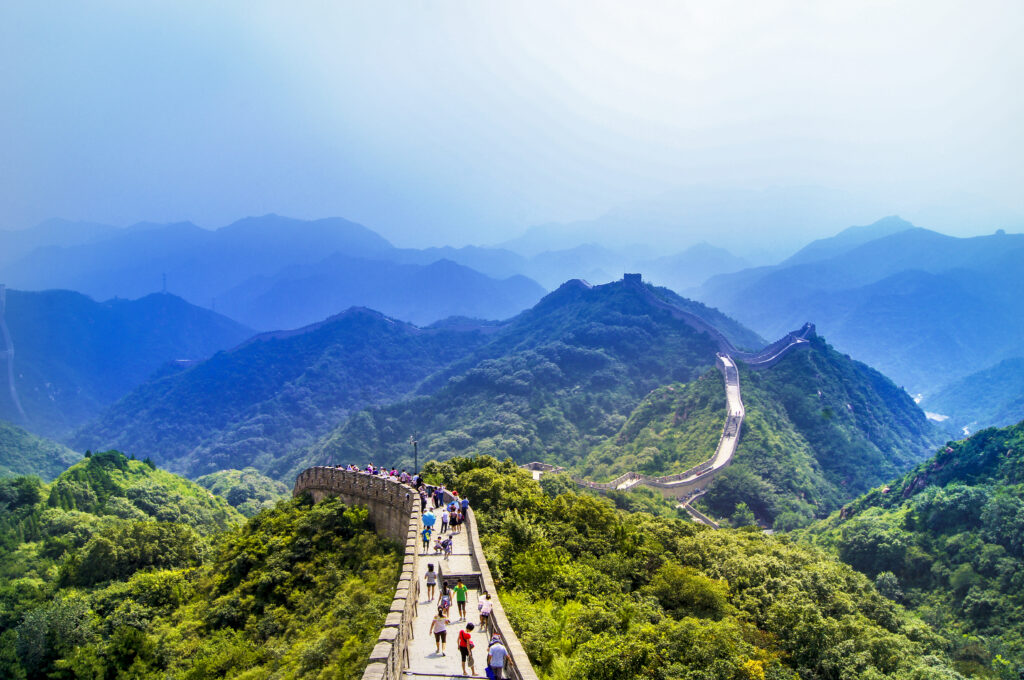
Recent discoveries show that early sections used reeds and wood. Scientists used radiocarbon dating on these materials to figure out their age. Some wall parts in Southern Mongolia, found with satellite images, date to the Western Xia dynasty. In Northwestern China, you can see walls made from rammed earth stretching across mountains and valleys.
| Archaeological Finding | Radiocarbon Dating Evidence | Construction Period / Dynasty | Construction Method |
|---|---|---|---|
| Lost segment in Southern Mongolia | Wood and rope dated to 1040–1160 AD | Western Xia | Wood and rope in wall |
| New sections in Northwestern China | Historical documents and surveys | Qin and others | Rammed earth |
| Archive photos and documents | Radiocarbon and remote sensing | Gansu, Ningxia, Mongolia | Reeds, wood, earth, bricks |
First Builders
You may wonder who built these early walls. The answer is not just one group. Different Chinese states built their own walls during the Spring and Autumn and Warring States periods. The State of Qi built some of the oldest known sections. Later, Qin Shi Huang ordered the unification of these walls around 221 BC. Builders used rammed earth, stones, and sometimes even reeds for support.
The Han Dynasty pushed the wall farther west. They used tamped earth and stone. Soldiers, peasants, prisoners, and conscripted workers all helped build the wall. In the Kumtag Desert, builders used reed layers to support the wall’s base. Archaeologists even found bronze and iron arrowheads nearby, showing that skilled Han artisans worked on these sections.
Did you know? Researchers used Geographic Information System (GIS) data to measure the wall’s length and location. They also found that the wall affected economic growth, population, and even trust in local governments. Here are some cool stats:
- GIS data mapped the wall’s exact path within 50 km.
- Satellite images showed differences in nighttime light, proving economic gaps on each side.
- Population and urbanization rates changed near the wall during the Qing dynasty.
- Tax collection and civic engagement linked back to systems set up during the Ming dynasty.
The great wall didn’t appear overnight. It grew from many smaller walls, built by many hands, using whatever materials were available. Each section tells a story about the people who lived and worked there.
Dynasties Involved
Qin and Han
You might think one emperor built the great wall, but that’s not true. The story starts with the Qin dynasty. Emperor Qin Shi Huang wanted to protect his new empire from northern invaders. He ordered hundreds of thousands of people—soldiers, workers, and even prisoners—to build the wall. The work was hard and dangerous. Many people lost their lives, with some estimates reaching 400,000. The wall stretched over 3,000 miles, with tall sections and guard towers. You can imagine how tough it was to build such a massive structure with only simple tools.
The Han dynasty came next. They didn’t just repair the wall—they expanded it. The Han rulers pushed the wall farther west to protect the Silk Road. This helped traders and travelers move safely between China and other countries. The Han used earth and stone, just like the Qin, but they also added new watchtowers and forts. The great wall became a symbol of strength and unity for the empire.
Ming and Others
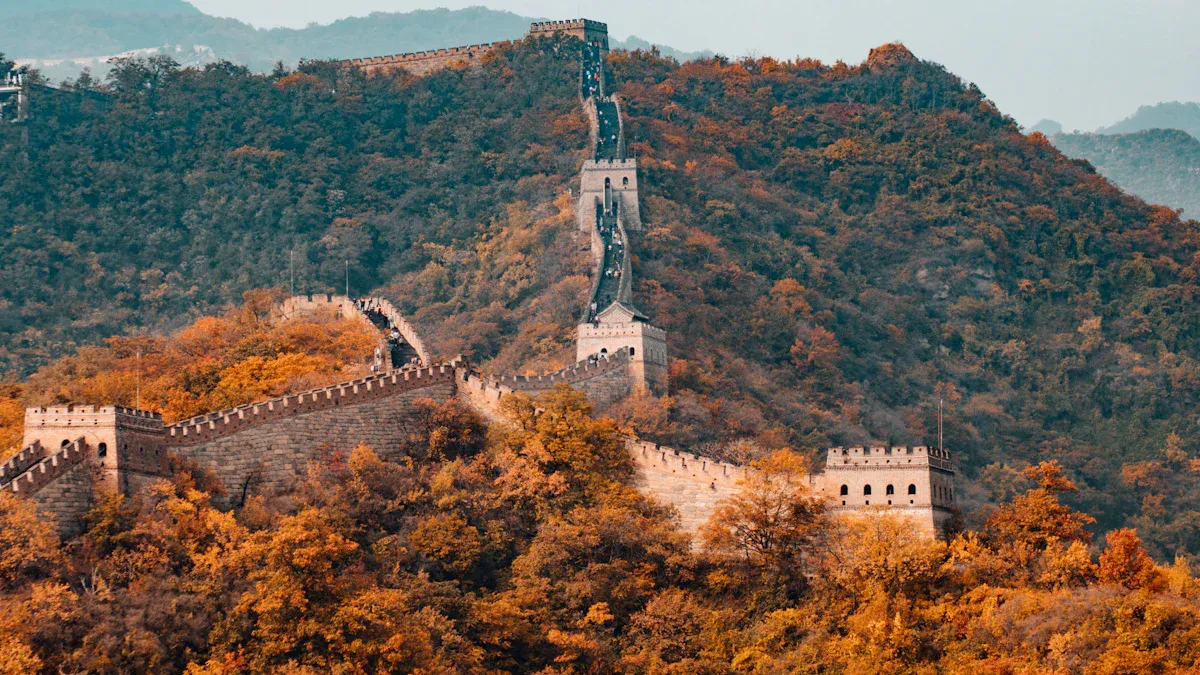
Fast forward to the Ming dynasty. This is when the wall you see in most photos was built. The Ming emperors faced many threats from the north, so they decided to rebuild and strengthen the wall. They used bricks and stones instead of just earth. The Ming wall is the best-preserved part today.
Here’s what makes the Ming dynasty’s work stand out:
- Between 1368 and 1398, workers built 248 masonry city walls, about 8 cities each year.
- Over 90% of these walls protected military garrisons, showing how important defense was.
- After a short break, construction picked up again after 1457. Workers built walls for 1,157 cities, mostly at the county level.
- The wall-building happened in waves, especially around Beijing, Sichuan, Hebei, and Shanxi.
- The garrison system played a big role. Records show 935 garrison set-ups and changes during the Ming dynasty.
- Wars and invasions often led to more wall building.
The great wall from the Ming dynasty stretches from Liaoning in the east to Gansu in the west. It crosses many provinces and stands as a reminder of China’s long history of defense and determination.
Total Length
Myths vs. Reality
You have probably heard wild stories about the length of the great wall. Some people say it stretches across all of China, while others claim you can see it from the moon. The truth is a bit more complicated. For centuries, myths and legends have surrounded the wall. Ancient tales talk about dragon lines, spirit realms, and even magical powers hidden in the stones. Some researchers, like Chang and Hearn, have studied these stories and compared them to real measurements. They found that while the wall does line up with certain mountains and stars, most of the magical claims come from folklore, not science.
In the 1980s, Russian investigators used special tools to measure strange energy patterns along remote parts of the wall. They found odd electromagnetic signals and even some unusual sounds. Scientists later explained these as natural effects caused by the rocks and the shape of the land. So, while the wall has inspired many legends, its true length comes from careful study, not just stories.
Fun fact: The wall’s alignment with Chinese geomantic “dragon lines” has fascinated both scientists and storytellers for years!
Measuring the Wall
Measuring the wall is not as easy as you might think. The wall twists through mountains, deserts, and grasslands. Some parts have crumbled away, while others hide under thick plants. Modern scientists use satellites, drones, and old maps to figure out where the wall goes. Low-orbit satellites, like the USGS Landsat, can spot the wall when snow or shadows make it stand out. Sometimes, experts look for breaks in the trees or odd shapes in the ground to find hidden sections.
Here are some cool ways experts measure the wall today:
- They use historical atlases and topographic maps to draw accurate paths.
- High-resolution satellite images help spot wall remains, even in hard-to-reach places.
- Special computer programs, like the Hough Transform, detect ancient features automatically.
- Stereo mapping lets scientists measure the height and width of the wall.
- Remote sensing helps protect the wall by showing where it needs repairs.
Even with all these tools, measuring the wall is still a challenge. Pollution, overgrown plants, and weather can hide parts of the wall from view. Astronauts have tried to spot the wall from space, but it is tough to see without perfect conditions. Experts agree that more research and better technology will help us learn even more about the great wall’s true size.
Provinces Crossed
Northern Route
Did you know the great wall stretches across a huge part of northern China? You might picture it winding through mountains, but it also crosses grasslands, deserts, and even farmland. As you follow the wall’s northern route, you travel through a mix of landscapes and cultures. Each province adds its own flavor to the journey.
Here are some of the main provinces and regions the great wall passes through:
- Hebei: This province surrounds Beijing and has some of the most famous wall sections.
- Beijing: The capital city is home to well-known spots like Badaling and Mutianyu.
- Shanxi: You find dramatic mountain scenery and ancient fortresses here.
- Shaanxi: The Yansui defense district stands out, with historical maps and archaeological surveys confirming the wall’s path.
- Gansu: The wall stretches into the desert, ending near the famous Jiayuguan Pass.
- Inner Mongolia: The wall runs along grasslands and steppes, showing a different side of China.
- Liaoning, Ningxia, Shandong, Tianjin, Henan, Qinghai: These provinces and regions also have wall segments, each with unique stories.
Geographic surveys and historical atlases use detailed spatial data, topographic maps, and administrative boundaries to confirm the wall’s path. Experts even use GIS tools to match old maps with today’s provinces, especially in places like Shaanxi.
You can see how the great wall connects so many different places. It’s not just a line on a map—it’s a link between cultures and landscapes.
Surprising Stops
You might think the great wall only has famous spots, but many hidden gems wait for you along the way. Some sections see almost no visitors, while local communities work hard to protect them.
- In Shandong, the Hetouying section stands almost forgotten, with barely any tourists. Local villagers sometimes patrol the wall to keep it safe.
- Hebei has Dongjiakou, where community groups and preservationists join forces to protect the ancient stones.
- Ningxia features the Sanguankou Pass, where desert winds shape the wall’s remains. Here, you see the challenges of desertification and the efforts to keep history alive.
Academic studies and preservation groups, like the Beijing Cultural Heritage Protection Center, support these lesser-known sites. They organize patrols and restoration projects. A recent government GPS survey aims to map every stretch of the wall, even the ones hidden by sand or grass.
Many of these stops tell stories of local pride and teamwork. You discover not just history, but the people who care for it every day.
The great wall is more than a tourist attraction. It’s a living monument that crosses provinces, cultures, and time.
Famous Sections
Mutianyu and Badaling
When you picture the great wall, you probably imagine the famous stretches near Beijing. Two sections stand out: Mutianyu and Badaling. Both offer something special, but each has its own vibe.
- Badaling sits closest to Beijing. You can reach it quickly, which makes it the most visited part of the wall. Over eight million people walk these stones every year. You see crowds, souvenir shops, and lots of energy. Badaling feels lively and busy, perfect if you want to feel the excitement of a world-famous landmark.
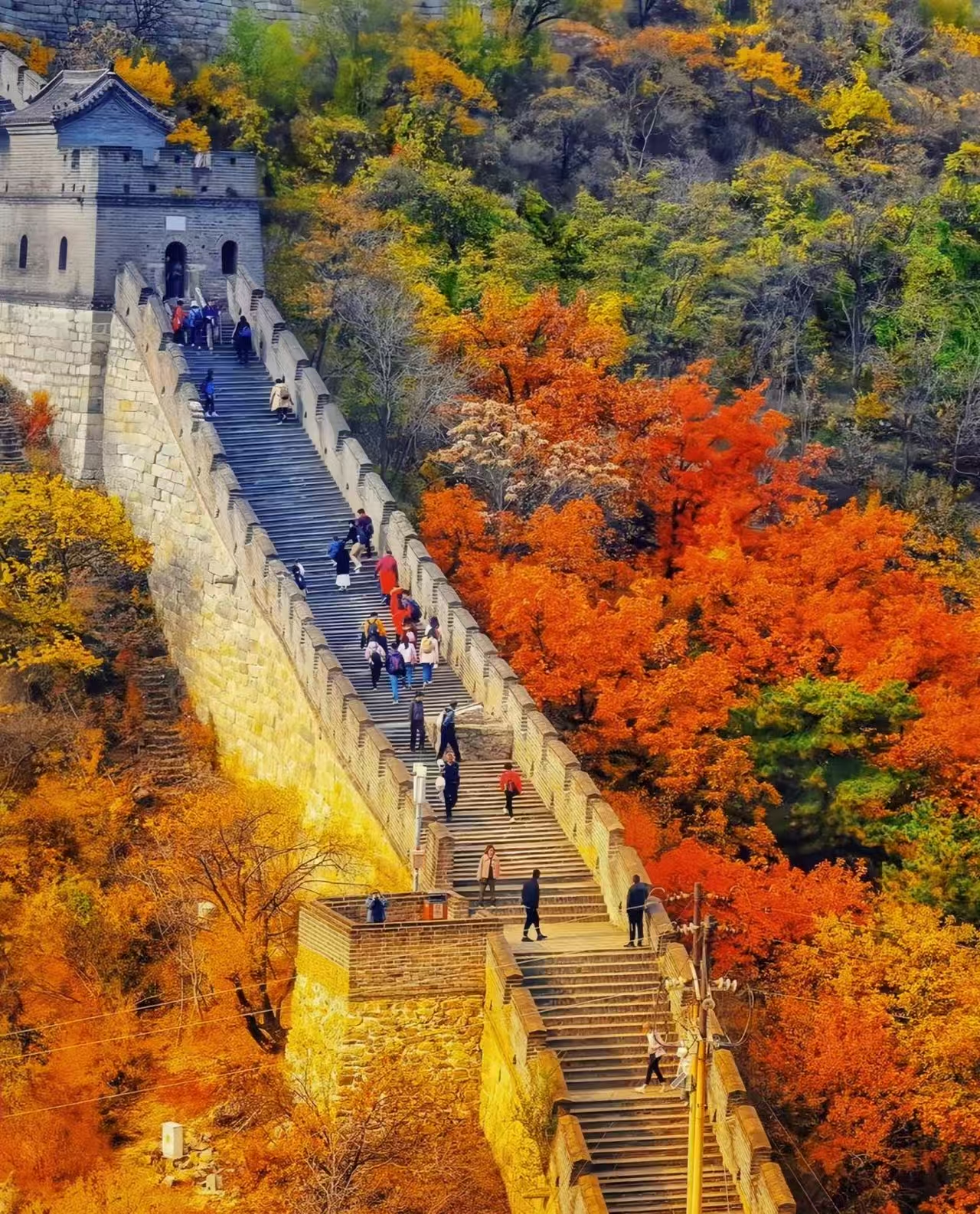
- Mutianyu gives you a different experience. This section is known for its beautiful scenery and unique watchtowers. The wall winds through green hills and forests. You get amazing views and a quieter walk. Many visitors love Mutianyu for its peaceful trails and well-kept paths.
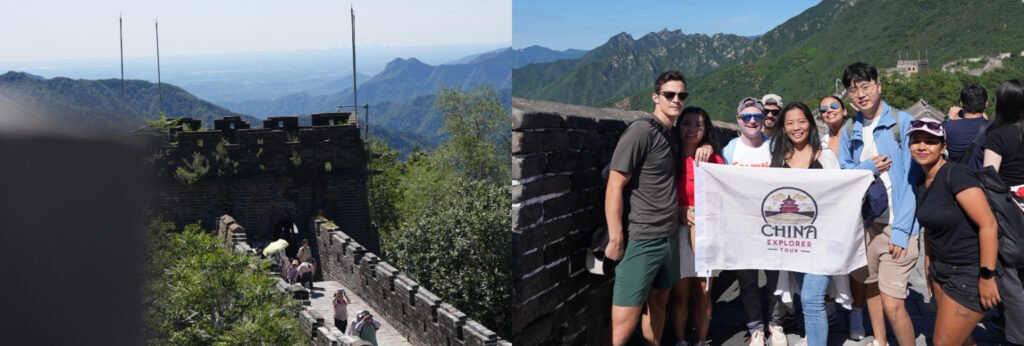
Did you know? Mutianyu scores an average of 4.78 out of 5 on TripAdvisor, with thousands of travelers praising its natural beauty and great facilities. It’s not just a wall—it’s a place where you can hike, take photos, and even ride a cable car.
With China Explorer Tour, you can explore Mutianyu on a private day trip. Your guide will share stories, help you find the best photo spots, and show you hidden corners. You can hike, ride the cable car, and taste local snacks. This is a chance to see the great wall in a way that feels personal and unforgettable.
Hidden Gems
You might think the great wall only has crowded tourist spots, but that’s not true. Some sections stay quiet and almost untouched. You can find peaceful ruins, wild landscapes, and small villages along the wall’s path.
- In Hebei, Dongjiakou offers ancient stones and local charm.
- Shandong’s Hetouying section feels like a secret, with barely any visitors.
- Ningxia’s Sanguankou Pass lets you see the wall meet the desert.
These hidden gems give you a chance to explore history without the crowds. Local communities often protect these spots, keeping the stories alive. If you want a real adventure, try visiting one of these lesser-known places. You’ll discover a side of the great wall that most people never see.
Unique Geography
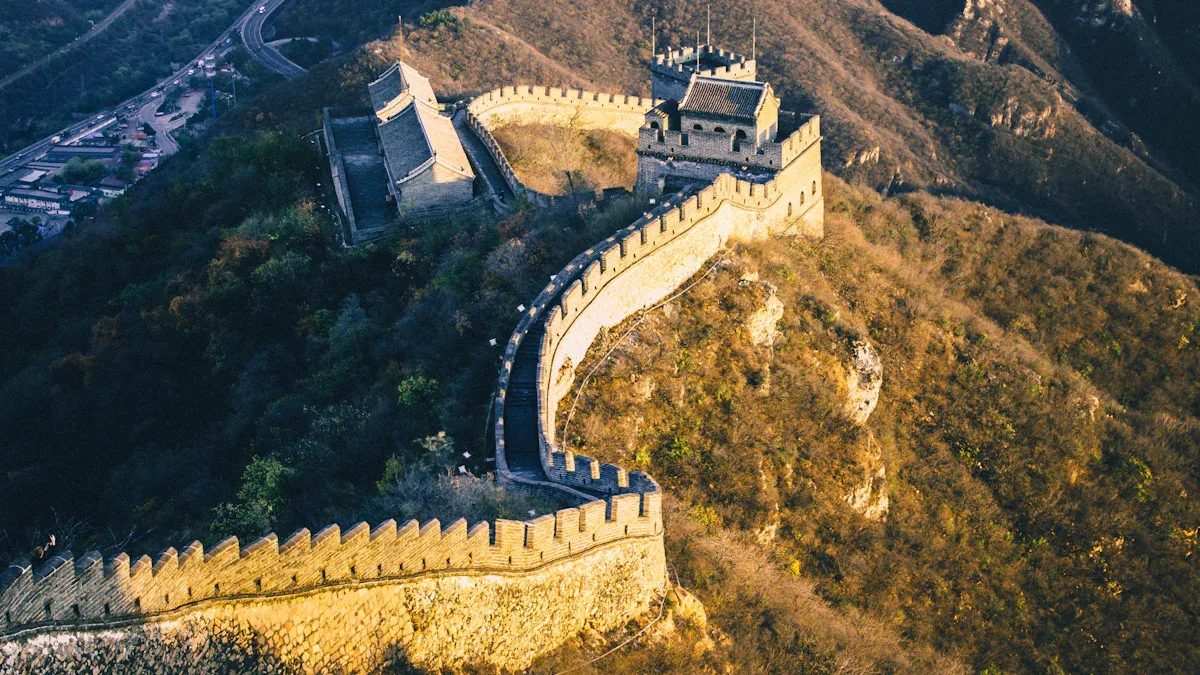
Mountains and Deserts
You might picture the great wall snaking over green hills, but it actually crosses some of the wildest landscapes in China. When you travel along the wall, you see how it adapts to every kind of terrain. In Xinjiang, the wall sits between huge mountain ranges. The Tianshan Mountains rise to the north, while the Kunlun and Altun ranges stand tall to the south. These mountains surround two giant basins—the Junggar Basin and the Tarim Basin.
The great wall doesn’t just stick to mountains. It stretches across plains, deserts, hills, river valleys, and even dry basins. Some areas get less than 200 millimeters of rain each year, so you find long stretches of wall surrounded by sand and rock. Scientists use GIS modeling and climate data to show just how different each region is. You can walk from a green valley straight into a dry desert, all while following the same ancient stones.
- Tianshan Mountains (north) and Kunlun/Altun ranges (south) frame the wall in Xinjiang
- Junggar Basin and Tarim Basin create wide, open spaces
- Wall sections cross plains, deserts, hills, and river valleys
- Extreme dryness shapes the landscape, with very little rain each year
Tip: If you love adventure, try visiting a section of the wall where mountains meet the desert. The views will blow your mind!
Engineering Feats
You might wonder how people built the great wall in such tough places. The answer is simple: creativity and hard work. Builders used whatever materials they found nearby. In the mountains, they stacked stones and rocks. In the deserts, they packed earth, reeds, and even layers of gravel. Some sections use bricks, while others use tamped earth or wood.
Engineers had to solve big problems. They built steep steps to climb cliffs and made watchtowers on high peaks. In sandy areas, they added extra layers to stop the wall from sinking. You can still see how the wall twists and turns to fit the land. Every curve and corner shows the skill of the people who built it.
Note: Next time you see a photo of the wall, look for the different building styles. Each one tells a story about the land and the people who lived there.
You just learned some wild facts that might change how you see the great wall. This ancient wonder still amazes people with its size, stories, and secrets. Why not see it for yourself? With China Explorer Tour, you can walk famous paths or find hidden spots that most travelers miss. Ready for an adventure? Share your thoughts, leave a comment, or start planning your own journey!
FAQ
How long did it take to build the Great Wall?
It took hundreds of years! Different dynasties built and rebuilt the wall over time. Some parts went up in just a few years, while others took decades. You can still see the work of many generations.
Can you really see the Great Wall from space?
No, you can’t see it with the naked eye from space. The wall is long, but it’s not wide enough. Astronauts say it blends in with the land. You need special cameras or perfect conditions to spot it.
Why did people build the Great Wall?
People built the wall to protect their land from invaders. It also helped control trade and movement. The wall made it harder for enemies to enter China. You can think of it as a giant shield.
Are all parts of the Great Wall open to visitors?
No, not every section is open. Some parts are well-preserved and easy to visit, like Mutianyu and Badaling. Other sections are wild or crumbling. You can find hidden spots, but you need to be careful.
What is the best way to visit the Great Wall?
Tip: Book a guided tour with experts like China Explorer Tour. You get stories, safe travel, and local snacks. You can hike, ride a cable car, or just enjoy the view. Every visit feels special!
Popular Packages
Choose Best Holiday Package

Why Choose This Tour? Customized Private Experience: Tailored for small groups (1-13 people) to ensure personalized attention. Cutting-Edge Tech Encounters:…
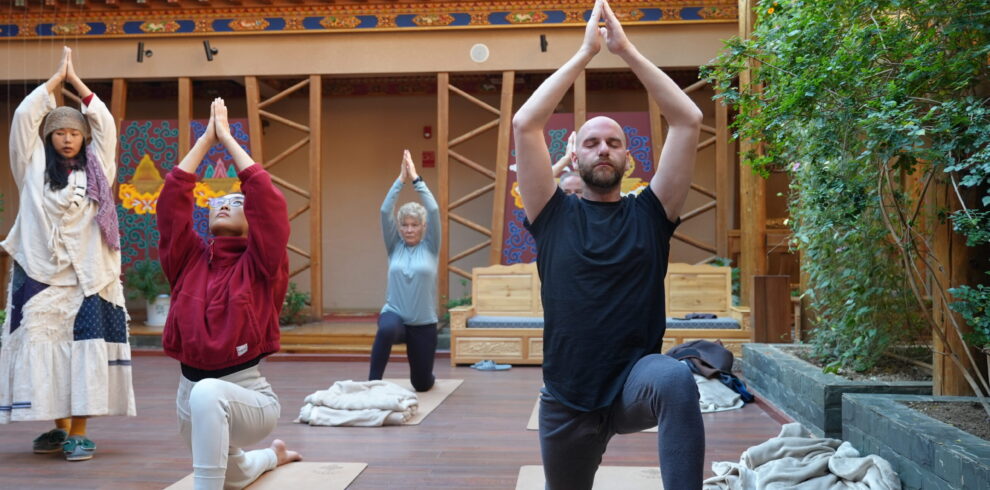
Explore Yunnan’s most iconic destinations in 8 days. From Kunming’s cultural charm to Dali’s lakeside beauty, Lijiang’s ancient towns, and Shangri-La’s Tibetan landscapes—this immersive China tour blends nature, heritage, and ethnic culture.

Why Choose This Datong Tour Package? Explore Datong’s most famous landmarks while embracing the elegance of traditional Chinese attire. This…

Introduction This is more than a conversation about health; it is an invitation to a Co-creative Wellness Retreat in one…
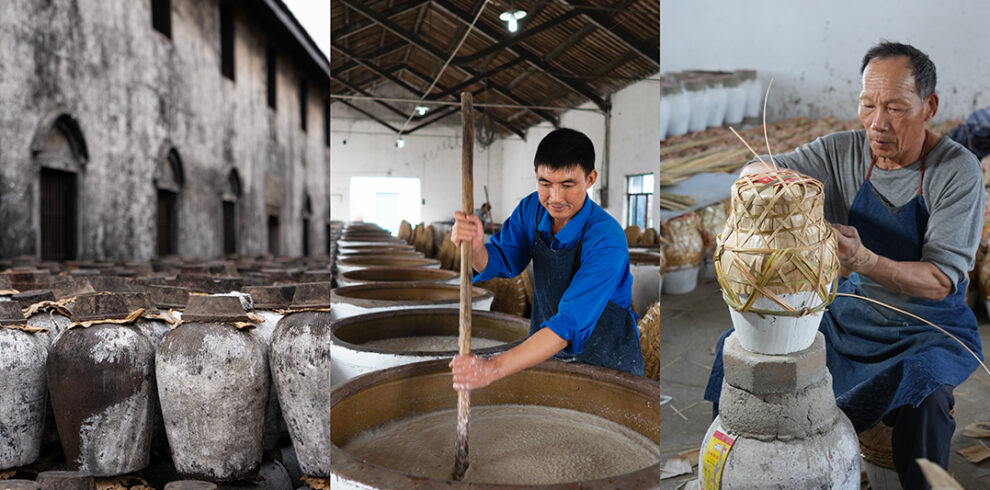
Why Choose This Shaoxing Yellow Wine (Huangjiu) Journey? This journey offers a cultural immersion into Shaoxing, the 2,000-year-old birthplace of…
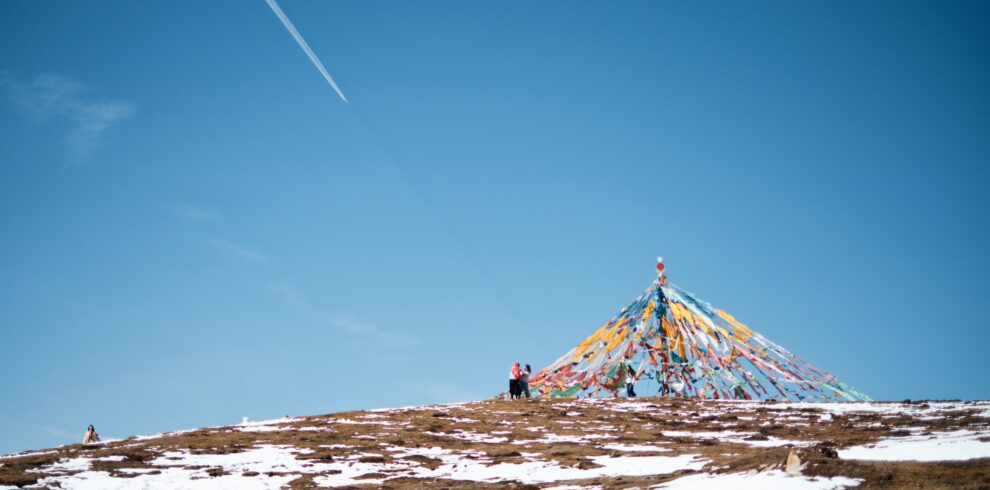
This carefully planned itinerary balances nature, spirituality, and culture, offering travelers a well-rounded exploration of Tibet’s incredible heritage. Whether you're interested in Buddhist spirituality, natural landscapes, or authentic cultural experiences, this tour will allow you to experience the best of Tibet in an intimate and respectful way.