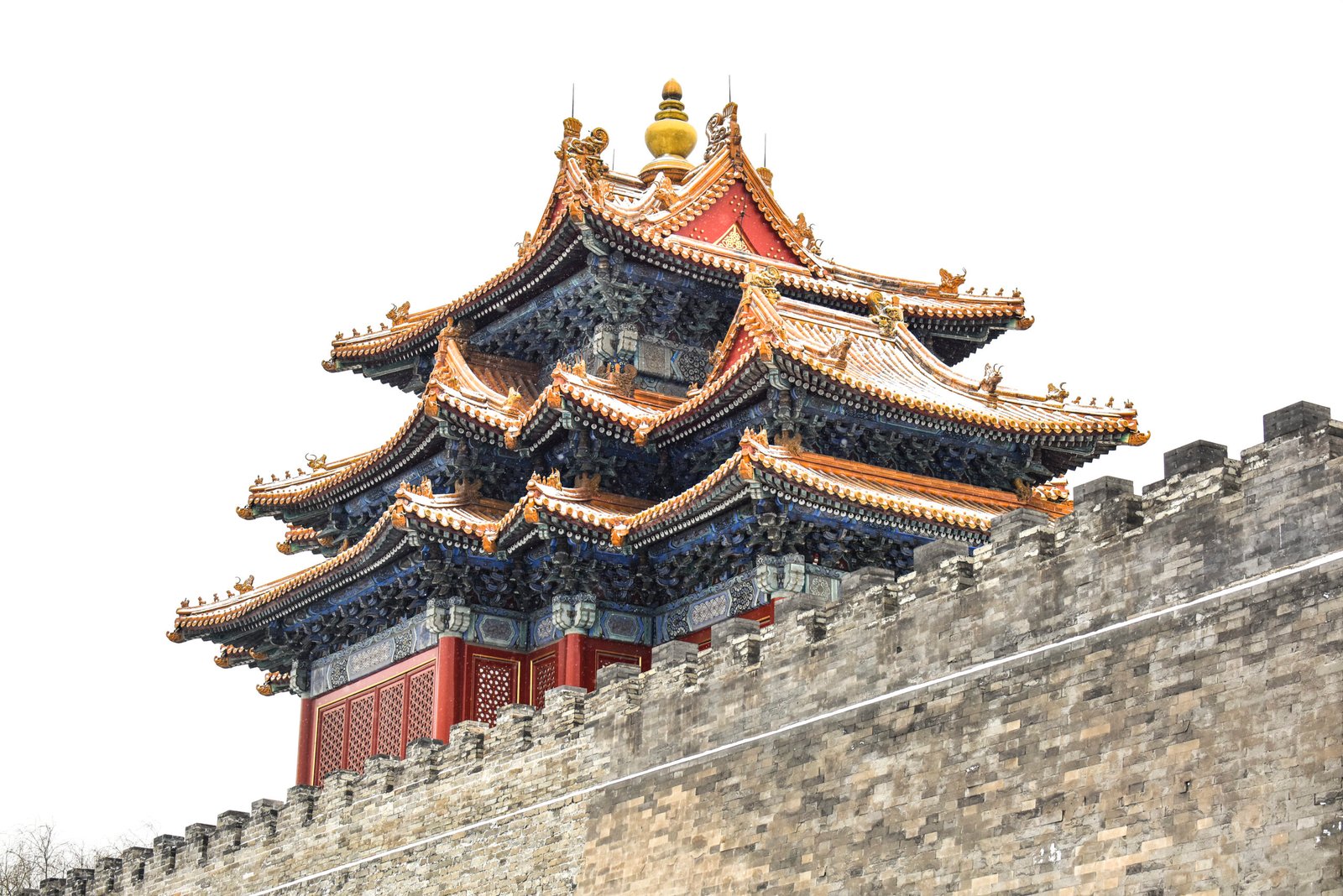
The Hall of Mental Cultivation, built during the Jiajing period of the Ming Dynasty, is located in the west of the central Inner Court of the Forbidden City and is one of the most mysterious palaces in the Forbidden City. It has witnessed the internal affairs and diplomacy of the Qing Dynasty, the death of the emperor, the change of power and other major historical events, carrying rich historical stories and unique layout.
Historical story
From resting places to centers of power
The Hall of Mental Cultivation was originally built by Emperor Jiajing of the Ming Dynasty as a temporary resting place and later used for alchemy activities. After the death of Emperor Jiajing, the old system was restored and it became the emperor’s idle residence.
During the reign of Emperor Ming, due to Emperor Ming Xi’s unwillingness to govern, Wei Zhongxian, the grand eunuch, used the Hall of Yangxin as his office in order to be closer to the outer court of the great government of the state, and since then the Hall of Yangxin has gradually become the center of power.
After the Qing army entered the customs, the Shunzhi Emperor continued the Ming system and used the Hall of Yangxin as a place to rest. During the reign of Kangxi, Yangxin Hall became a workshop in the palace, specializing in the production of palace items.
After Emperor Yongzheng ascended the throne, he did not move to the Qianqing Palace on the grounds of filial piety, but chose to live in the Yangxin Hall. From then on, the Hall of Yangxin became the main residence of the emperor and the center of daily administration, gradually replacing the status of the dry Qing Palace and becoming the center of political activities in the Qing court.
The life and affairs of the emperors
From Emperor Yongzheng to the last emperor Puyi, a total of eight Qing emperors lived in the Yangxin Hall. Three of them (Shunzhi, Qianlong and Tongzhi) died there.
The Hall of Mental cultivation was not only the emperor’s residence, but also an important place for the emperor to handle government affairs. After Emperor Yongzheng set up a military office on the south side of the Yangxin Hall, the daily imperial gate administration gradually decreased, and more government affairs were handled in the Yangxin Hall.
The Hall of Mental Cultivation was also where the Emperor received foreign envoys. For example, in the 59th year of Kangxi (1720), Emperor Kangxi received the papal legate Jiale in the Hall of Mental Cultivation.
Ruling from behind a curtain and the departure of the last emperor
During the reign of Tongzhi, Empress Dowager Ci ‘an and Empress Dowager Cixi sat behind the curtain in the East Warm Pavilion of Yangxin Hall and handled state affairs.
On February 12. 1912. in the third year of the Xuantong Dynasty, Empress Dowager Longyu and Emperor Xuantong Pu Yi held the last pilgrimage ceremony in the Yangxin Hall, and then the Qing Chamber announced its abdication.
In the twelfth year of the Republic of China (1924), Feng Yuxiang led troops into the Forbidden City and drove Puyi out of the Hall of Mental health, which ended the history of the ancient palace as the emperor’s residence.
Furnishings layout
antechambe
The front hall of Yangxin Hall is three wide, 36 meters wide, 3 deep, 12 meters deep. The roof is made of yellow glazed tile, which is a kind of mountain roof. It is indirect in the Ming room and the west. It looks like nine rooms.
There is a throne and imperial case in the middle of the Ming room, hanging on the Yongzheng Emperor’s imperial book “Zhengren and” board. Behind the throne are displayed the writings of previous emperors about their experience in governing the country for the new emperor to read.
East warm Pavilion has a throne, to the west, it was Cixi, the two Empress Dowager Ci ‘an government.
The West warm Pavilion is divided into a number of rooms, with the emperor to see the memorial, secret talk with the minister of the small room “diligent and pro-virtuous hall”, as well as the Qianlong emperor’s reading office “Sanxi Hall”, as well as small Buddha hall, Meiwu and other places for the emperor to provide Buddha and rest.
A surname
The rear hall is the emperor’s bedroom, a total of five, east and west for the bedroom, each with a bed, the emperor can live at will.
There are five rooms on each side of the rear hall, the east five for the queen’s residence, the west five for the concubine and other people to live. There are more than ten rooms on both sides of the bedroom, the room is small, simple furnishings, is for the concubines and other people to temporarily live in the place.
Other buildings
There is a glazed door in front of the hall of Mental cultivation, called “mental Cultivation Gate”, outside which there is a narrow east-west courtyard. In the fifteenth year of Qianlong (1750), three consecutive rooms were added here, which were the values of the eunuchs, guards and duty officers in the palace.
Yangxin Hall complex also includes I-corridor, back hall, Meiwu and other buildings, together constitute this multi-functional building complex.