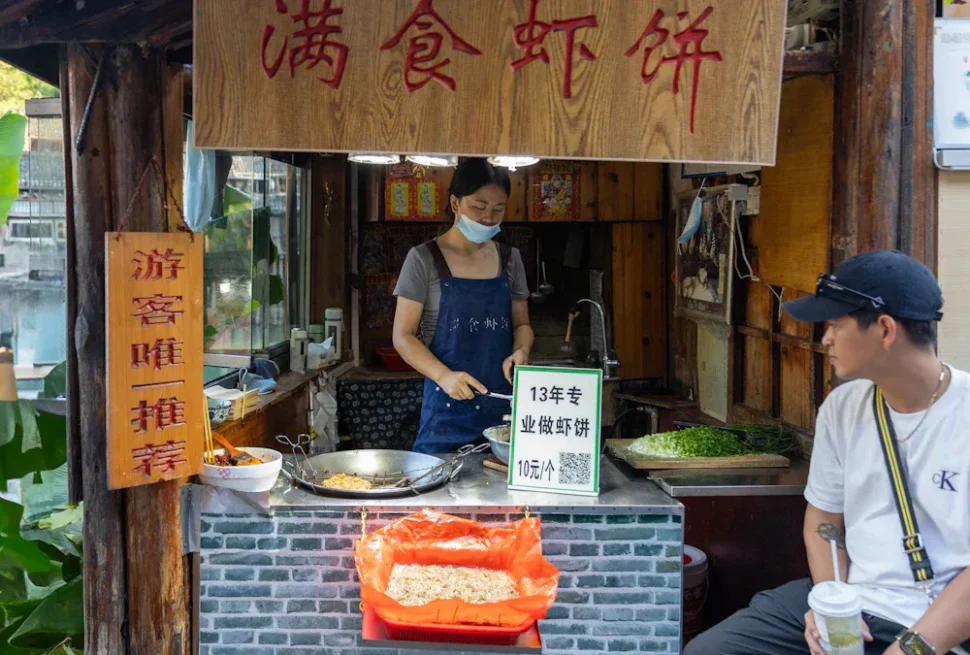

Step into the xi’an muslim quarter. The smell of lamb skewers and fresh flatbread fills the air. These smells pull you through busy and crowded streets. You will hear people laughing. You will see bright lanterns everywhere. You can feel the energy from people who love food. Now, only about 10 percent of shops are Hui food vendors. But their food still shapes the muslim quarter. If you want to eat like a local, get ready to taste new things. Explore the area and join the fun in this lively place.
Key Takeaways
- Walk or take the metro to see the Muslim Quarter. The metro is fast and cheap. Try foods like roujiamo, yangrou paomo, and biang biang noodles. These dishes show real local flavors. Go during the day for a quiet visit. Go at night to see crowds and fun lights. Order food by pointing or copying what locals do. Pick stalls with long lines for tasty food. Dress in simple clothes to show respect. Stay quiet and calm, especially during prayers. Be patient and wait if people are praying.
Xi’an Muslim Quarter Guide
Getting There
You have a few easy ways to reach the xi’an muslim quarter. If you are near the city center, you can walk. Many people do this because the area sits close to other famous spots. Want to save time? Try the metro. Just hop on Line 1 or Line 2. The metro is fast and cheap, usually costing only 2 to 5 RMB. Buses also run all over the city and cost about 1 RMB. If you want the fastest ride, you can take a taxi or a chartered car, but these cost more.
| Destination/Attraction | Metro Line(s) |
|---|---|
| Muslim Quarter | Line 1 or 2 |
Tip: The metro is the best choice if you want to avoid traffic and get there quickly.
When to Visit
The muslim quarter stays lively almost all day. Most food stalls open around 8 a.m. and close between 10 and 11 p.m. You can come in the morning for breakfast or wait until evening for the night market. If you want to avoid big crowds, try visiting before noon or after 8 p.m. The area feels safe and busy even at night, so you can enjoy snacks and lights after dark.
Main Streets
The muslim quarter is not just one street. It is a group of busy streets filled with food and culture. The main stretch runs from Dapiyuan to Qiaozikou. This street bursts with life and offers almost 300 kinds of snacks. You will see people grilling meat, making noodles, and selling sweet treats. Another famous street is HuajueXiang. Here, you can visit the Great Mosque and see old buildings. This street is perfect if you want to learn about Hui culture and see local vendors. Locals also call the area huimin jie, which means Muslim Street. All these streets are easy to walk and full of bright lights at night.
Street Food Crawl
Beiyuanmen Start
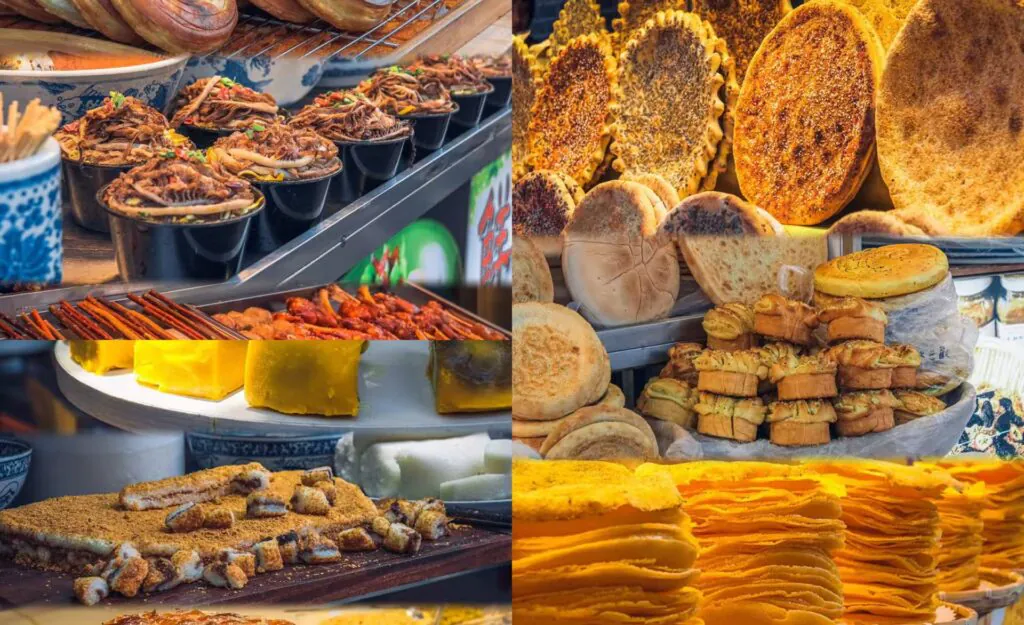
You start your food adventure on Beiyuanmen street. This street sits at the heart of the Muslim Quarter. You see rows of stalls and shops, each one calling out with bright signs and sizzling grills. The smell of grilled lamb and fresh bread fills the air. Locals and travelers walk side by side, searching for the next tasty bite. You hear the sound of cleavers chopping, vendors shouting, and laughter from groups of friends. This street sets the perfect mood for your food crawl.
Tip: Begin your walk at the Drum Tower. Head north into Beiyuanmen street. This way, you catch the best stalls before the crowds arrive.
Breakfast Bites
Morning in the Muslim Quarter feels calm and inviting. You see locals grabbing breakfast before work. Vendors set up early, serving hot food to start the day. You can try beef pancakes, hulatang soup with flatbread, or a simple bowl of noodles. Most breakfast items cost between $2 and $6, so you can eat well without spending much.
| Meal Type | Average Price Range (USD) |
|---|---|
| Breakfast | $2 to $6 |
- Beef Pancakes: 2.5 to 5 yuan each (about $0.36 to $0.72)
- Hulatang soup with Mo: 12 to 25 yuan (about $1.8 to $3.8)
You watch as vendors pour steaming soup into bowls and flip pancakes on hot griddles. The street feels quieter in the morning. You can take your time and enjoy the local flavors.
Lunch and Snacks
By noon, the Muslim Quarter comes alive. The street fills with people looking for lunch and snacks. You see lines at the most popular stalls. The smell of spices and grilled meat fills the air. You can try many kinds of street food here. Locals love rou jia mo, which is a Chinese hamburger stuffed with slow-cooked lamb. You might spot crispy fried squid on a stick or meat cooked on wooden skewers. Sweet treats like walnuts rolled in sugar and baked cakes tempt you from every corner.
Here are some favorites for lunch:
- Rou jia mo (Chinese hamburgers with slow cooked lamb)
- Crispy fried squid on a stick
- Meat cooked on wooden skewers
- Walnuts rolled in sugar
- Pigs trotters coated in sauce and sesame seeds
- Baked cakes
- Dessert snacks
- Rice pudding cakes
- Fried potatoes
- Mushroom and tofu swirls
- Fresh pomegranate juice
You can grab a snack and keep walking, or sit at a small table and watch the street life. Every bite gives you a taste of local culture.
Night Market Eats
When the sun goes down, the Muslim Quarter transforms. The night market glows with red lanterns and bright lights. The street feels lively and crowded. Locals and tourists come together to enjoy the festive mood. You hear music, laughter, and the sizzle of food cooking. The energy keeps you moving from stall to stall.
At night, you find signature dishes that you cannot miss:
- Lamb grilled on rose sticks
- Lamb hoofs
- Salted lamb meat in round bun sandwiches
- Freshly squeezed pomegranate juice
- Tofu
- Pounded nuts
- Caramel candies
- Muslim breads
- Lamb kebabs (small pieces on iron sticks or larger pieces with chili and cumin)
- Sticky rice cakes (Guihuagao and mirror cake)
- Braised sheep’s hooves
- Black roasted salted duck eggs
You see people lining up for lamb kebabs and sticky rice cakes. The smell of cumin and chili fills the air. Some stalls offer unusual items, so you can try something new if you feel brave. The night market feels different from the daytime. It is busy, loud, and full of excitement. If you want a quieter experience, visit in the morning. If you love crowds and energy, the night is perfect for you.
Note: The night market in the Muslim Quarter is famous for its vibrant and festive atmosphere. You will see traditional decorations and meet people from all over the world.
Must-Try Street Food
Roujiamo
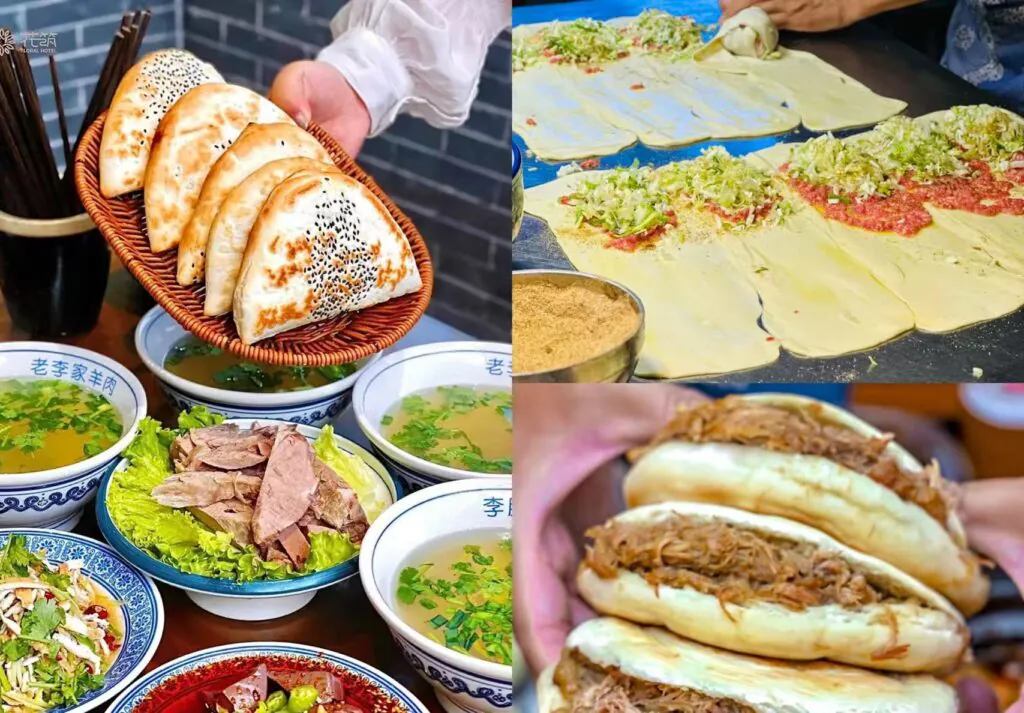
If you want to try one of Xi’an’s most iconic street food dishes, start with roujiamo. Locals call it the “Chinese hamburger,” but you will find it is so much more than that. The bread, known as muslim flatbread or “mo,” has a crispy outside and a soft, chewy inside. Vendors make it fresh every day. They knead the dough, let it rest, shape it into discs, and pan-fry it until golden. Some even bake it for extra crunch.
The filling is where the magic happens. In the Muslim Quarter, you often get slow-braised beef or lamb, cooked with spices like cinnamon, star anise, and dried tangerine peel. The meat simmers for hours until it falls apart. After that, the vendor chops it up, mixes it with sauce, and stuffs it into the hot bread. You might see a brush of chili oil or a sprinkle of fresh coriander before they hand it to you.
Here’s a quick look at the history and cultural roots of roujiamo:
| Aspect | Details |
|---|---|
| History Length | Over 2,200 years |
| Origin of Flatbread (‘mo’) | Introduced as ‘hubing’ by diplomat Ban Chao during Han Dynasty (206 BCE-220 CE) |
| Refinement Location | Tongguan, near Xi’an, where the flatbread was made crisp and multi-layered |
| Popularity Boost | Praised by Emperor Li Shimin during the Tang Dynasty, increasing its fame |
| Cultural Context | Shaanxi as a crossroads of cultures and Xi’an as the Silk Road’s eastern terminus, a melting pot of East-West influences |
| Economic Impact | Over 20,000 restaurants in China, large-scale production and export, local government support |
You can taste the Silk Road in every bite. The spices and bread show how Xi’an mixed flavors from east and west. When you eat roujiamo, you are eating a piece of history.
Tip: Try both the beef and lamb versions. Each has a different flavor, and both are delicious.
Yangrou Paomo
Yangrou paomo is a dish you will see on almost every street in the Muslim Quarter. Locals love this bread and mutton soup, and you will see why after your first spoonful. The experience starts when you get a bowl and a round muslim flatbread. You break the bread into tiny pieces, about the size of a soybean. This step is important. The smaller the pieces, the better the soup soaks in.
After you finish, you hand your bowl to the chef. They pour hot mutton broth and tender lamb over your bread pieces. The soup comes back steaming, rich, and full of flavor. You can add chili sauce or sweet pickled garlic for extra kick. This ritual makes eating yangrou paomo special. It is more than just food—it is a tradition.
You can find famous spots like Lao Sun Jia, which has served bread and mutton soup since the Qing Dynasty. Prices for a bowl usually range from 25 to 40 RMB, making it a filling and affordable meal.
| Restaurant Name | Location | Average Cost (CNY) per Person |
|---|---|---|
| Laomijia Restaurant | Muslim Quarter, Lianhu | 40 – 60 |
| Lao’anjia Diyiwan | Muslim Quarter, Beilin | 35 |
| Laowujia Restaurant | Muslim Quarter, Lianhu | ~30 |
Note: Don’t rush the bread-breaking step. Locals say the soup tastes best when you take your time.
Biang Biang Noodles
You cannot miss biang biang noodles when you visit Xi’an. These hand-pulled noodles are famous for their width and chewy texture. People call them “belt noodles” because they are so thick and long. The name “biang” comes from the sound the dough makes when chefs slap it on the table.
Vendors top the noodles with garlic, ginger, chili, cumin, and spring onions. Then, they pour hot oil over the spices. This step brings out a bold, spicy aroma that fills the air. The sauce mixes soy sauce, vinegar, sesame oil, and chili flakes. Every bite is chewy, spicy, and full of flavor.
The character for “biang” is one of the most complex in Chinese. It has up to 58 strokes and does not appear in any dictionary. Locals love to show you how to write it, but most people just enjoy eating the noodles.
Did you know? The “biang” character is so tricky that even many Chinese people cannot write it. It stands for the skill and tradition behind these noodles.
Skewers and Dumplings
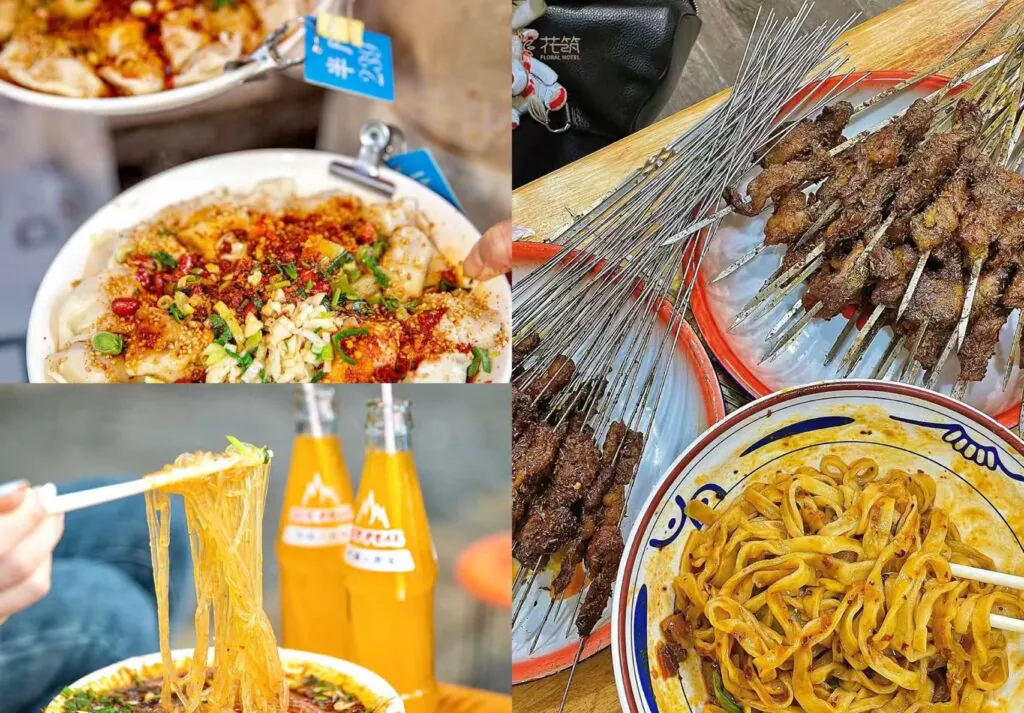
When you walk down the street, you will smell cumin-crusted lamb skewers grilling over open flames. These skewers are a favorite snack for locals. Vendors use lamb, beef, or even chicken wings. They marinate the meat with cumin, chili oil, and salt, then grill it until juicy and smoky. You can also find skewers with quail eggs, sausages, and vegetables.
Dumplings are another must-try. Look for soup-filled dumplings with thin skins and hot, savory broth inside. Some places, like Yousufu Dumpling Eatery, serve a mix of six different fillings in one dish. You never know what flavor you will get next! Many dumplings come in a sour soup, which adds a tangy twist.
Tip: Try Zhiliang Steamed Dumplings for a burst of hot soup in every bite. Be careful—they are hot!
Sweet Treats
No food crawl is complete without dessert. The Muslim Quarter offers a rainbow of sweet treats. You will see vendors frying persimmon cakes, which have a crispy shell and a gooey, fruity center. Osmanthus cake is soft and fragrant, topped with candied dates. Mirror cake looks shiny and comes in flavors like melon, blueberry, and rose.
Other favorites include honey jelly cake, pea or green bean cake, and peanut brittle candy. You can snack on roasted walnuts or walnut cake for something nutty. Fried dough twists are crunchy and fun to eat. If you want something unique, try sticky fairy floss, which melts in your mouth like magic.
- Persimmon Cake: Crispy outside, soft inside, made from sweet persimmons.
- Osmanthus Cake: Glutinous rice with a floral scent and sweet dates.
- Mirror Cake: Steamed rice cake in many fruit flavors.
- Honey Jelly Cake: Glutinous rice, honey, and red bean paste.
- Peanut Brittle Candy: Crunchy and sweet, coated in sesame.
- Roasted Walnuts: Warm and nutty, perfect for a quick snack.
- Fried Dough Twist: Dense, crunchy, and great for sharing.
- Sticky Fairy Floss: Light, sweet, and melts away fast.
Pro Tip: Try a few different sweets. Each one tells a story about Xi’an’s history and culture.
You will find cold noodles and steam and griddled bread sandwiches at many stalls, too. These dishes are perfect if you want something cool or need a quick bite between stops.
Eat Like a Local
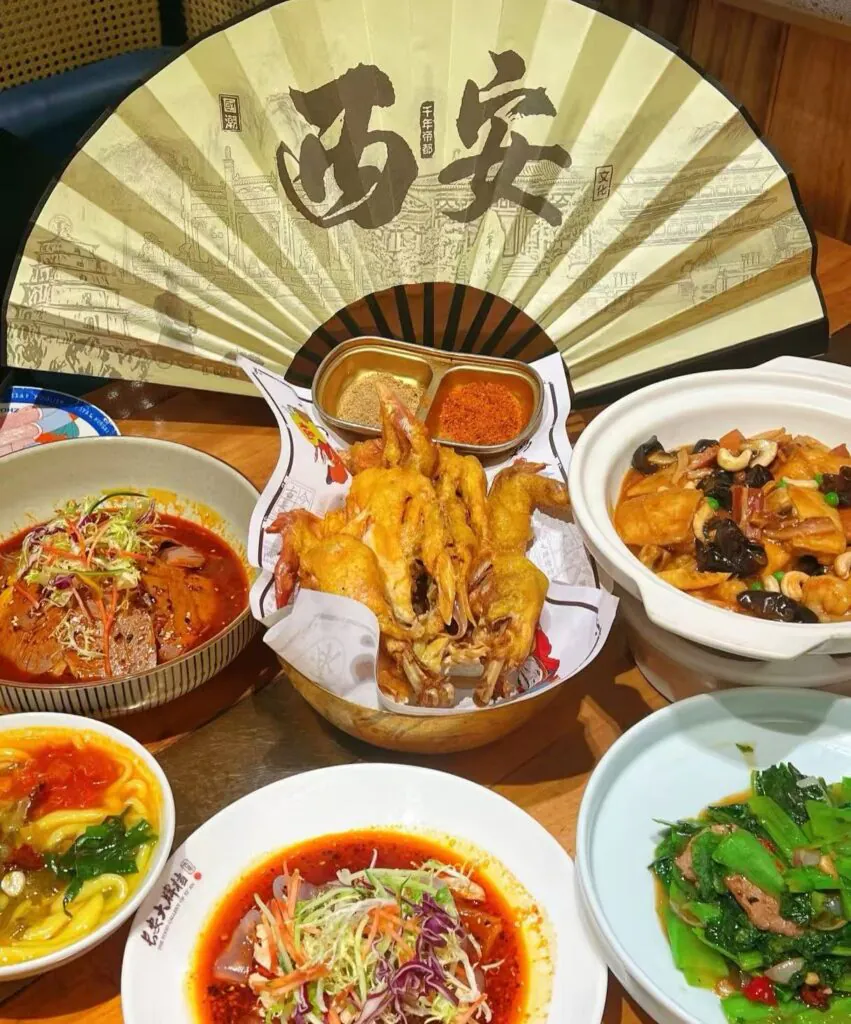
How to Order
Ordering in the Muslim Quarter feels exciting, but it can look confusing at first. You see lines of people waiting at busy stalls.
Most vendors do not speak much English, so pointing works best. Just watch what the person in front of you orders.
If it looks good, point and smile. You can also use your fingers to show how many you want. Many stalls have pictures on their menus, which makes things easier.
If you want to try something new, ask a local for a recommendation. Locals love to share their favorite dishes with visitors.
Tip: Carry small bills or coins. Most stalls only take cash or mobile payments like WeChat Pay or Alipay.
Spotting Authentic Stalls
You want to eat where the locals eat. Look for stalls with long lines of local people. These places often serve the freshest food. You might see a small kitchen and a cook working fast behind the counter. The best vendors use simple signs and focus on making one or two dishes really well. If you see a stall with lots of tourists and no locals, keep walking. The real gems are sometimes hidden in side streets or small alleys. Trust your nose and follow the smell of fresh bread or grilled meat.
| What to Look For | Why It Matters |
|---|---|
| Long lines of locals | Shows the food is popular |
| Simple, focused menu | Means the dish is a specialty |
| Open kitchen | Lets you see the cooking |
Local Etiquette
Eating in the Muslim Quarter means showing respect for local customs. All food here is halal, so you will not find pork or alcohol. Most dishes use lamb or beef. Dress modestly and avoid loud noises when you eat. During prayer times, some stalls may close or slow down. Be patient and respectful. If you visit a mosque or a local home, remove your hat and shoes if asked. Always greet vendors with a smile and thank them after your meal.
- Remove hats and shoes when appropriate
- Avoid making loud noises
- Dress appropriately
- Be especially respectful during prayer times
- Respect local customs in this culturally rich area
Note: Understanding and respecting these traditions helps you connect with the local community and enjoy your food crawl even more.
Muslim Quarter Tours
China Explorer Tour
If you want to see the best of Xi’an in one day, the China Xi’an Trip: Discover Terracotta Army, and Traditional Treasures by China Explorer Tour is a great choice. You start your adventure at the famous Terracotta Warriors Museum. You stand among thousands of ancient soldiers and feel the history all around you. After that, you get to walk or bike along the old City Wall, taking in views of the city.
The real highlight for many is the visit to the muslim quarter. Here, you join a guided walk through lively streets filled with local snacks and friendly vendors. You taste dishes like fried beef pancakes, persimmon cakes, and handmade dumplings at safe and authentic stalls. Your English-speaking guide shares stories about the area’s culture and history. You even get a tuk-tuk ride through the backstreets, which gives you a peek into daily life. The tour meets at a central subway station and ends near another, so you can keep exploring on your own. If you have special dietary needs, just let your guide know in advance.
Tip: Bring your camera! You can take photos and videos, but always ask vendors first.
Guided Food Experiences
A guided tour in Xi’an’s Muslim Quarter gives you more than just a taste of local dishes. You get a personal guide who knows the best places to eat and the stories behind each bite. Many tours offer flexible routes based on what you want to try. You might sample roujiamo, yangrou paomo, or even cold noodles. Your guide can help you avoid tourist traps and find the real flavors locals love.
You also learn about the area’s history and meet people from the community. Some tours even include stops at old mosques or temples, where you hear about local traditions. Families love these tours because they are private and easy to customize. If you have food allergies or special diets, guides can help you find safe options. Past guests say these tours make exploring easy and fun, with no stress about where to go or what to order.
Note: Wear comfortable shoes. You will walk through busy, narrow streets and see a lot in just a few hours.
You now know how to eat like a local in the Muslim Quarter. Try new foods, follow the crowds, and respect local customs. Stay curious and enjoy the electric market atmosphere.
- Sample favorites like roujiamo, yangrou paomo, and biang biang noodles.
- Visit the Great Mosque for a peaceful break.
- Explore both day and night to see local life and meet the community.
Share your stories or questions below—your adventure starts here!
FAQ
What if I have food allergies?
Let your guide or vendor know about your allergies before you order. Many stalls use nuts, sesame, or gluten. If you join a guided tour, your guide can help you find safe options. Always carry a translation card for your allergy.
Can I use credit cards at the food stalls?
Most food stalls only accept cash or mobile payments like WeChat Pay or Alipay. You should bring small bills. If you do not have Chinese mobile payment apps, cash works best.
Is the Muslim Quarter safe at night?
Yes! The Muslim Quarter stays busy and well-lit after dark. You will see families, locals, and tourists enjoying snacks. Just keep an eye on your belongings and stick to the main streets.
How do I find vegetarian food?
You can find vegetarian options like cold noodles, fried potatoes, and sweet cakes. Ask vendors if a dish has meat or animal products. Some stalls offer tofu or mushroom snacks. Look for dishes with lots of vegetables.
Do I need to speak Chinese to order food?
No, you do not need to speak Chinese. You can point to what you want or use pictures on menus. Vendors are friendly and used to helping visitors. A smile goes a long way!
See Also
Exploring The Rich Flavors And Traditions Of Chinese Cuisine
Must-Try Popular Chinese Dishes To Enjoy In 2025
Essential Advice For An Unforgettable Tai Chi Experience
Experience Distinctive Hanfu Beauty Looks On China Tours
Best China Travel Packages For Singapore Visitors In 2025
Popular Packages
Choose Best Holiday Package

Explore Yunnan’s most iconic destinations in 8 days. From Kunming’s cultural charm to Dali’s lakeside beauty, Lijiang’s ancient towns, and Shangri-La’s Tibetan landscapes—this immersive China tour blends nature, heritage, and ethnic culture.
Why Choose This Datong Tour Package? Explore Datong’s most famous landmarks while embracing the elegance of traditional Chinese attire. This…

Introduction This is more than a conversation about health; it is an invitation to a Co-creative Wellness Retreat in one…

Why Choose This Shaoxing Yellow Wine (Huangjiu) Journey? This journey offers a cultural immersion into Shaoxing, the 2,000-year-old birthplace of…

This carefully planned itinerary balances nature, spirituality, and culture, offering travelers a well-rounded exploration of Tibet’s incredible heritage. Whether you're interested in Buddhist spirituality, natural landscapes, or authentic cultural experiences, this tour will allow you to experience the best of Tibet in an intimate and respectful way.

This is more than a school trip—it’s a journey into the heart of Tibet, where ancient traditions meet snow-capped mountains and spiritual wisdom flows through every valley.